
Harmonising with God in Our Music and Practices
Part 8 - Lyrics
Chapter 29
Chapter 29
Defending Our Beliefs
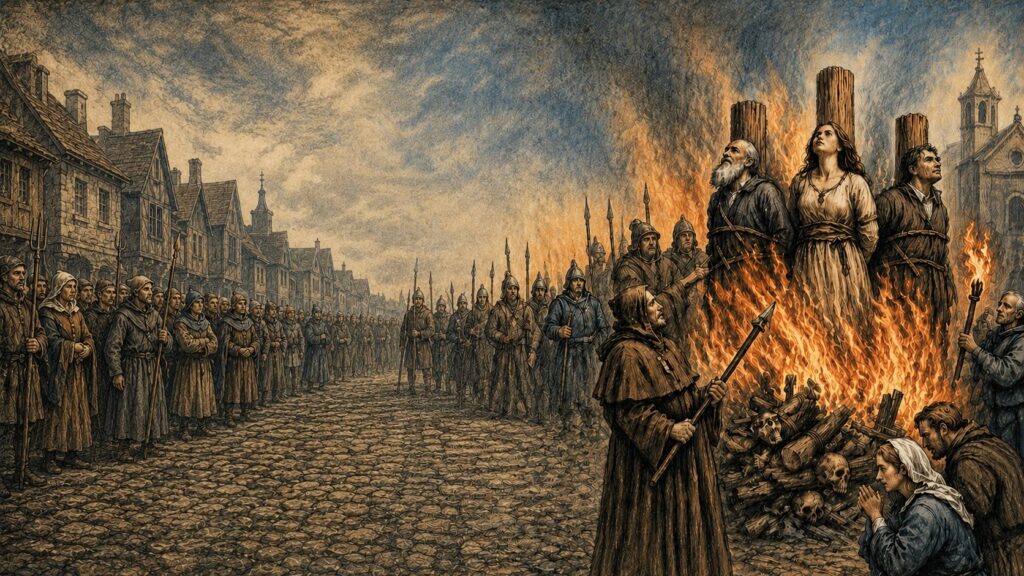

Though it is important that we focus on doctrines and sharing our beliefs with others, it must be kept in the right context. If we are not careful, we can come across as proud and combative toward those who believe differently to us. Sharing our beliefs with each other must be done with meekness and fear (1 Pet 3:15) and with the realisation that truth is revealed by the Holy Spirit (Jn 16:13, 1 Cor 2:14). When pride is the motive, the goal is to win the argument rather than to discover truth. Mrs White advised Adventists not to start with controversial doctrines but to first connect with others on common ground. She believed we should build respectful relationships before sharing with them our unique position. She said, “no tirade is to be made against the doctrines held by others.”47 (p155) Bible bashing does much harm. Worse still is when doctrines are used as a political weapon. During the wars of religion in Europe, much evil was committed in the name of religion and defending doctrine. This likely played a part in the emergence of secularism because people were tired of the conflict in religion. Though Jesus was strict about upholding God’s law, he was harsh against those who forced their religious rules onto others, yet patient toward gentiles and merciful to those entangled in sin. That is why music with peaceful tunes and sound lyrics is such a great way of sharing our beliefs. It is a gentle and pleasant way for people to learn about and know God.
But what do we do when our beliefs are attacked and ridiculed? How should we respond when persecuted for our religious convictions? Some choose to avoid conflict by keeping their beliefs to themselves. Unlike the Adventists who spent much time in discussion about doctrine, General Booth avoided discussing doctrine and discouraged Salvation Army members from debating controversial beliefs and practices, such as baptism. For example, in his New Year address to officers in January 1883, the General made the following statement:
“I think you will perceive that any order from me for the general administration of the Sacraments would be likely to produce grave dissensions. There is a very great and widespread difference of opinion with regard to the modes of administration – one half of the religious world denying in toto the efficacy of the Sacraments as administered by the other half.”491 (p135)
Therefore, though General Booth was willing to be ridiculed for his controversial methods, he tried to avoid theological controversy.
The apostles, on the other hand, constantly wrestled with conflicts in the church over theology. They spent much time grappling over doctrine with each other and with the church community. They immediately dealt with anyone who was deviating from Jesus’ teachings and from Scripture. They strove to maintain unity in truth and they cautioned against neglecting the traditions they had been taught (1 Cor 11:2). Paul advised Timothy:
“Till I come, give attention to reading, to exhortation, to doctrine… Take heed to yourself and to the doctrine. Continue in them, for in doing this you will save both yourself and those who hear you.” (1 Tim 4:13,16)
Doubt in the Face of Opposition
The Advent movement arose out of a belief in the soon coming of Jesus. As they studied Scripture more, Adventists soon started to accept the seventh-day Sabbath as well. These messages were proclaimed boldly by Adventists from the pulpit, in big tent meetings and through printed materials. They wrote pamphlets and books about it and distributed them widely. They also sang hymns about the Sabbath and the second advent of Christ. If warning people of hell was a central message of the Salvation Army, the Sabbath became an important message of the Seventh-day Adventist movement. But telling people that a well-established Christian tradition was in error was not a popular message!
Though the teaching attracted much criticism, there were still a considerable number of converts and faithful Adventists were determined to preach what they considered to be present truth. They believed it was part of the third angels’ message which was to be a loud warning to the world not to follow after the first beast of Revelation – a corrupted religious system which had established a counterfeit day of worship. The three angels’ message was about restoring true worship.
Should Christians allow outside pressures and influences to mould their behaviours and practices? Should they doubt and neglect their beliefs because few others agree? Not necessarily. There are innumerable examples throughout history of the majority of people believing something to be true that was later found to be false. Bias distorts people’s reasoning ability. Those involved in scientific studies know just how powerful bias is at distorting our judgement. Many factors can twist our understanding. For example, self-interest is a common element in bias. That is why scientists are supposed to declare any conflict of interest when involved in scientific studies. If a researcher is employed by the company that produces the product they are researching, that scientist will be biased toward finding a favourable outcome for the product. The research pyramid ranks research according to quality of evidence. The higher a study is on the pyramid, the less bias affects the outcome and, consequently, the more reliable the results (see Figure 6).
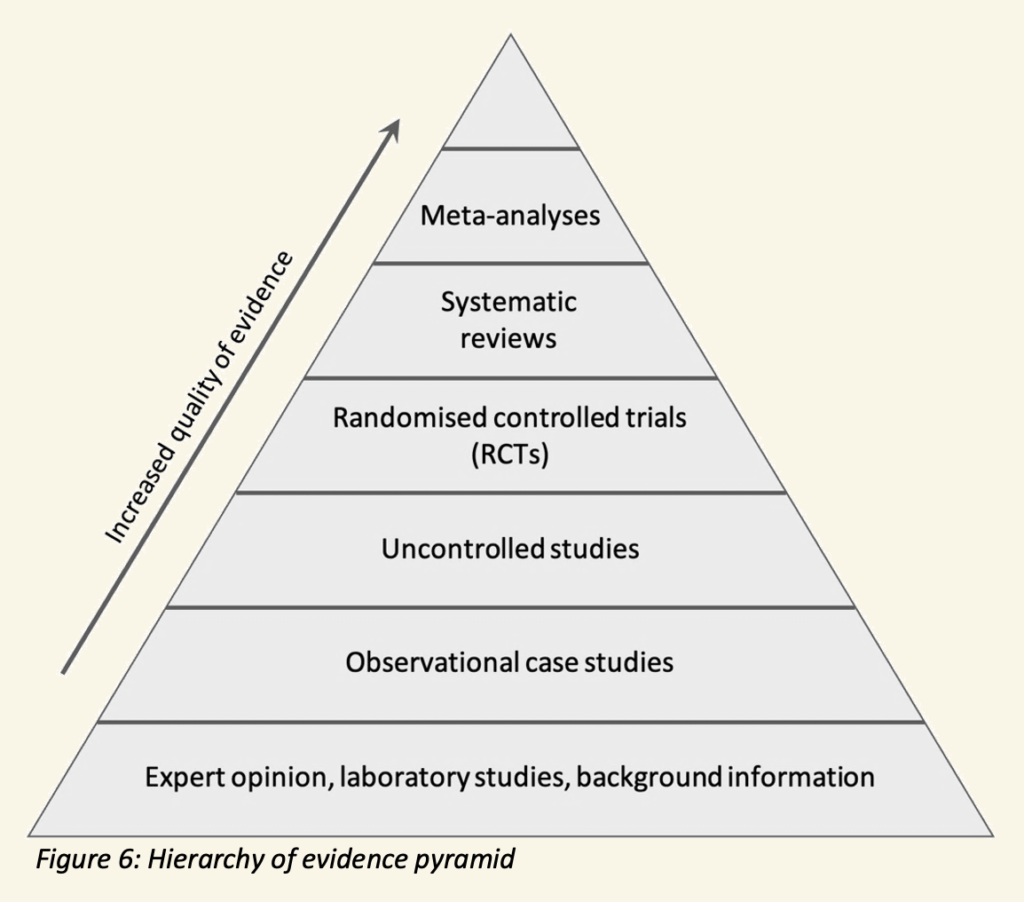
One reason why so many people have rejected the Bible is because they believe science has refuted the Biblical account of creation. However, the weakness of origins science is that it is not possible to do high quality bias free research. Origins science is restricted largely to observational studies and expert opinion which are at the base of the research pyramid and, hence, fraught with all kinds of bias. In a peer reviewed secular research article looking at the accuracy of research in ecology, evolution and behaviour, the authors conclude that “Much research remains infused with unconscious biases… It is unclear how much published science is affected by bias and might therefore be false.” Blinding is an important method used to improve the accuracy of scientific research by helping to remove bias. However, the authors of the study conclude that “While blinding is routine in medical and psychological research, blinding is unfortunately not a universal practice in biology.” They make the point that:
“No one would trust a novel medical treatment or drug unless the clinical research had been conducted blind… yet the field of ecology, evolution, and behavior appears to overlook a habitual lack of reporting blind observation in published methods.”492
In another study, scientists reviewed the literature for bias in scientific research and found widespread biases across diverse topics in evolutionary studies. “Biases in ecological and evolutionary studies,” the authors said, “may be a particularly vexing problem but have not received rigorous consideration.”493 The scientist who makes major discoveries in evolutionary research receives much accolade and commendation. Without adequate measures to remove this and other kinds of research bias, results cannot be trusted. Therefore, people are rejecting the accuracy of the Biblical creation account based on interesting yet unreliable scientific research.
Bias is usually subconscious; therefore, we are not even aware that our thinking is being erroneously persuaded in a certain direction. It can affect even the highly educated. Just as bias can distort the understanding of highly educated scientists, bias can also distort the understanding of highly educated theologians. One-and-a-half millennia of Sunday keeping and 2.3 billion adherents is a great bias in the direction of Sunday adherence instead of seventh-day Sabbath keeping. Let’s face it, how many people would want to go against such a widely held and deeply entrenched tradition? How could so many Christians get it wrong?
The same could be said of other Christian traditions. It was bias that distorted the thinking of the Pharisees, causing them to put confidence in the traditions of men. How can we tell if a Christian tradition is from God or if it is manmade and against God? How do we safeguard ourselves against bias in our Christian practices? There is only one sure method – that is, total surrender to God. We have to constantly put self aside, never looking to others, but seeking only to find God’s will. That is what taking up our cross is all about.
The Protestant reformers faced not only the seemingly insurmountable opposition of the Roman Catholic Church structure and tradition, which was the centre of all social, political and religious life, but an even greater bias – the threat of death. Many Anabaptists, for example, were martyred simply for rejecting infant baptism. Cruelly, they were often executed by drowning in mockery of their belief in water baptism. The reformers gave up everything for their doctrines – beliefs that we so take for granted that we do not even care to sing about them. Sabbatarians have also been persecuted down through the ages. For example, many of the Waldenses were Sabbath keepers and found refuge in the wilderness from the oppression of the church. In 1487, Pope Innocent VIII ordered the extermination of the Waldenses. In 1655, about 1700 Waldenses were put to death by Catholic forces commanded by the Duke of Savoy. In 2015, Pope Francis asked forgiveness for the Roman Catholic Church’s inhumane treatment of the Waldenses in the past.
Why have there been so many Sabbath keepers over the centuries willing to defend the Sabbath to their death? This book has discussed a number of reasons Sabbath keepers give for keeping the Sabbath, but can they be so certain that it is worth laying down their lives for? Didn’t the disciples even start worshipping on the first day? What is the big deal? John the Revelator says that he was “in the Spirit on the Lord’s Day (Rev 1:10).” There are a couple of key verses that seem to indicate that Sunday was being observed by the apostles, inferring that Sunday is the Lord’s day:
“Now on the first day of the week, when the disciples came together to break bread, Paul, ready to depart the next day, spoke to them and continued his message until midnight.” (Acts 20:7)
“On the first day of the week let each one of you lay something aside, storing up as he may prosper, that there be no collections when I come..” (1 Cor 16:2)
It is concluded that because the disciples met together on Sunday and because they collected donations on Sunday, that it must have been regarded as the Lord’s Day in honour of Jesus’ resurrection. Sabbath keepers, on the other hand, point out that believers were accustomed to coming together and breaking bread on any day of the week (Acts 2:46), just like believers do in our time for various reasons, including Bible study, prayer meetings, training and so on. They also insist that laying aside a collection on the first day does not infer that it was a revered day. On the contrary, Jews never handled or collected money on the Sabbath, including tithes or offerings494; therefore, it would make more sense that Paul requested that the funds be gathered on the first day to avoid taking up a collection on the Sabbath.
Moreover, the Bible only ever refers to the seventh day as the Lord’s day, the day that He sanctified or set apart as special that belongs to Him and, therefore, a day in which we can receive rich blessings:
“God blessed the seventh day and sanctified it” (Gen 2:3)
“…the seventh day is the Sabbath of the Lord your God.” (Ex 20:10)
“You made known to them Your holy Sabbath.” (Neh 9:14)
“If you turn away your foot from the Sabbath, from doing your pleasure on My holy day, and call the Sabbath a delight, the holy day of the Lord honorable…” (Is 58:13)
“Therefore the Son of Man is also Lord of the Sabbath.” (Mk 2:28)
This was proof enough for seventh-day Sabbath keepers to uphold the Sabbath in honour of their Lord who they believed to be Lord of the Sabbath. Yet, so powerful is the influence of the bias of tradition that even though the whole of scripture, from Genesis onward, establishes the seventh day as God’s holy day, virtually all of Christendom has rejected God’s holy day, putting their confidence in tradition based on a few ambiguous passages. Sabbath keepers just could not see evidence enough to disregard the day God made holy in the beginning. Since they believed it is a serious matter to ignore God, numerous Christians have been so convicted of the Sabbath that they have been willing to give up Sunday keeping, lose their jobs, face rejection by their communities and even die for their belief.
“The statutes of the Lord are right, rejoicing the heart (Ps 19:8).” Therefore, let us sing, sing, sing of the law of God for it is sweeter than honey and more precious than the finest gold (v10). Gold is not worth dying for, but God’s law is. The reformers died to uphold God’s law and so did Jesus, yet we treat it so lightly. If it is worth dying for, then it is worth singing for. “Now by this we know that we know Him, if we keep His commandments. He who says, ‘I know Him,’ and does not keep His commandments, is a liar, and the truth is not in him. But whoever keeps His word, truly the love of God is perfected in him. By this we know that we are in Him (1 Jn 2:3-5).”
Challenging Our Own Beliefs
While martyrdom might prove our sincerity, it does not prove us right. What a shame it would be to make a great sacrifice for something God does not even require – worse still, for something that God opposes. Many Jews died defending the temple in 70 AD thinking they were fighting the cause of God, but to what avail? Though we must sing, teach and preach about our doctrines, it does not mean we must never question them. While our beliefs should not be shaped by outside pressures, we must always allow God’s Word, studied with careful and prayerful contemplation, to mould our beliefs and doctrines. If we truly love God’s Word, then we must share our understanding of it with each other, grapple with it, delve into Scripture and pray about it until our understanding is more complete. Mrs White said:
“There is no excuse for anyone in taking the position that there is no more truth to be revealed, and that all our expositions of Scripture are without an error. The fact that certain doctrines have been held as truth for many years by our people, is not a proof that our ideas are infallible. Age will not make error into truth, and truth can afford to be fair. No true doctrine will lose anything by close investigation.”490 (p35)
God has clear teachings, and less clear teachings. It is the difficult ones that force us to study His Word carefully, until we have a deeper understanding of His Word. We must never stop wrestling over our beliefs. That is why Seventh-day Adventists call their doctrines fundamental beliefs. Doctrine gives the sense that our beliefs are set in concrete. We over emphasise the infallibility of our forefathers who helped to establish our doctrines. But they were as human as we are, as was General Booth, C. S. Lewis, Mrs White, Martin Luther and King David and other great minds that have gone before us. They were fallible.
We can trust God’s true prophets because they are more fully guided by direct revelation from God – but even they are fallible. Nathan told David to go ahead and build the temple, only to be told by God that David was not to build the temple (2 Sam 7; 1 Chr 22:8). A prophet’s own opinion is not always correct. But when God sends a message to a prophet to give to His people, we can trust that message. That is why we can trust Scripture because it was written by God’s messengers under divine inspiration. We have to put less trust in ordinary men and women – as mighty as they may be – and more trust in God’s Word. Everything must be tested against the Bible. Scripture says that God’s end time people are commandment keeping people (Rev 12:17) who follow the lamb wherever he goes (Rev 14:4). They love Christ. They also have the testimony of Jesus which is the spirit of prophecy (Rev 12:17; 19:10) – in other words, they listen to and proclaim Jesus’ instructions through His Word and His prophets. Jesus said, “Most assuredly, I say to you, he who receives whomever I send receives Me; and he who receives Me receives Him who sent Me (Jn 13:20).”
When Laws Oppose Our Beliefs
In the time of the reformers, infant baptism was legislated by civil law. When the founding Anabaptists studied Scripture, they concluded that believer baptism was Biblical and not infant baptism. Jesus said:
“Most assuredly, I say to you, unless one is born of water and the Spirit, he cannot enter the kingdom of God (Jn 3:5).” He also said, “Go therefore and make disciples of all the nations, baptizing them in the name of the Father and of the Son and of the Holy Spirit.” (Matt 28:19)
Then, in Acts, we find examples of the apostles baptising converts in water (Acts 8:38, 10:47), confirming their understanding of literal baptism of believers by submersion in water. There is not a single Biblical example of infant baptism. Therefore, the founding Anabaptists felt they had a solid scriptural foundation for defying the law and were prepared to die for it.
How should we respond when the law clashes with our beliefs? How do we remain in harmony with God if the community is against us? If we are going to be faithful commandment-keeping Christians when we are compelled to act contrary to our religious convictions, we may have to defy governing authorities, like the Anabaptists and other Protestants did. This may result in great hardship and persecution, even death. For example, the second beast of Revelation 13:
“…causes all, both small and great, rich and poor, free and slave, to receive a mark on their right hand or on their foreheads, and that no one may buy or sell except one who has the mark or the name of the beast, or the number of his name.” (Rev 13:16-17)
This will cause great hardship for those who are faithful to God’s commands. In fact, those who will not worship the image of the beast will be killed (v15). If we are not singing theologically rich songs now, we may end up deceived by the great signs performed by the second beast which he was granted to do in the sight of the first beast, “telling those who dwell on the earth to make an image to the beast who was wounded by the sword and lived (v14).”
If we are going to rebel against the law of the land, however, it must be in reaction to clear and explicit defiance of the commands of God. Our Lord is a God of law and order. Disobedience to civil law is disobedience to God, unless the law of the governing authorities causes us to clearly violate God’s law:
“Therefore submit yourselves to every ordinance of man for the Lord’s sake, whether to the king as supreme, or to governors, as to those who are sent by him for the punishment of evildoers and for the praise of those who do good. For this is the will of God, that by doing good you may put to silence the ignorance of foolish men— as free, yet not using liberty as a cloak for vice, but as bondservants of God. Honor all people. Love the brotherhood. Fear God. Honor the king.” (1 Pet 2:13-17)
This was said despite the fact the ruling authority, the Roman government, was pagan and restricted the liberty of minority religions, such as Christianity. The Roman government put our Lord to death, yet Christians were advised to submit to its authority. Mrs White cites this passage when cautioning church members not to misrepresent their liberty by becoming indignant when their freedom to work on Sunday is taken away. Adventists are not to ‘fly into a passion over this matter,’ she said.365 (p193)Losing one’s personal religious liberty is not necessarily cause for disobedience. Neither is knowledge of corruption in the leadership alone grounds for disobedience. Jesus expected Jews to pay tithe to the temple, even though he knew the temple system to be corrupted (Mk 12:41-44). Knowing the leadership is bad or corrupt does not necessarily give us freedom to neglect our duties to them, otherwise no earthly government would be worthy of respect. God expects order. We are not a law unto ourselves. We are accountable for our own actions, not for the actions of governing authorities. David refused to kill Saul when he had opportunities to do so because Saul was the anointed King (1 Sam 24:6). The very act of disobedience to authority without just cause is disobedience to God:
“Therefore whoever resists the authority resists the ordinance of God, and those who resist will bring judgment on themselves.” (Rom 13:2)
Throughout history, leaders of movements have often used music to incite anger toward the enemy and to spread propaganda. By contrast, as Christians, our music should incite peace and goodwill toward others. Paul said, “Therefore let us pursue the things which make for peace (Rom 14:19).” At the heart of the rebellion in heaven was rebellion against authority. Disobedience to government is a serious matter and must have good reason and we must be able to make ourselves accountable to God.
Some have suggested that Paul is only referring to submitting in the sense of not resisting arrest; however, he uses paying taxes as an example. We are simply required to pay our taxes (something many Christians are guilty of not doing). He says nothing about refraining from resisting arrest when we do not pay our taxes. Peter reminds us that Jesus is our example. Not only are we to submit to overseers that treat us well, but also to those who treat us harshly:
“Servants, be submissive to your masters with all fear, not only to the good and gentle, but also to the harsh. For this is commendable, if because of conscience toward God one endures grief, suffering wrongfully. For what credit is it if, when you are beaten for your faults, you take it patiently? But when you do good and suffer, if you take it patiently, this is commendable before God. For to this you were called, because Christ also suffered for us, leaving us an example, that you should follow His steps: ‘Who committed no sin, Nor was deceit found in His mouth’; who, when He was reviled, did not revile in return; when He suffered, He did not threaten, but committed Himself to Him who judges righteously; who Himself bore our sins in His own body on the tree, that we, having died to sins, might live for righteousness – by whose stripes you were healed. For you were like sheep going astray, but have now returned to the Shepherd and Overseer of your souls.” (1 Pet 2:18-25)
The third most common character in Psalms is the enemy, as pointed out by Michael J. Rhodes (see Figure 5).472 Often, the Psalmist calls on God for revenge. Should we take revenge against our enemies? How do we reconcile this with Paul’s statement above and Jesus’ command to love our enemies as we love ourselves? One way to harmonise this apparent contradiction is to recognise that revenge in the hands of God is justice. The psalmists call on God to take revenge against their enemies. When David had the opportunity to take revenge against King Saul, he chose not to harm Him. Paul suggests that it is better to be cheated than to take out legal action against a fellow Christian:
“Now therefore, it is already an utter failure for you that you go to law against one another. Why do you not rather accept wrong? Why do you not rather let yourselves be cheated?” (1 Cor 6:7)
There is an important principle in these passages. We are not to retaliate when we are wronged. That is why it is so critical to get the balance right in our music. There needs to be a perfect balance between love for our fellow human beings and justice for wickedness – this must be reflected in our lyrics. Our tunes and lyrics must express love for others but a longing for justice to put an end to wickedness.
Of course, submission to authority does not mean we do nothing about corruption and mistreatment, especially when we see others being oppressed. We are to be a light on the hill, shining the love of Jesus across the land, influencing leaders to make wise choices. We must be diligent in writing to our politicians and church leaders, raising concerns and lobbying peacefully for justice and morality to be upheld. Unlike modern worship songs, Psalms describes the poor on nearly every page and cries out for the plight of widows, refugees and the oppressed (see Figure 5). When we are doing our job right as Christians, the government is more likely to act wisely, according to Biblical principles. If the government of a Christian nation is acting authoritarian and enforcing immoral laws, we can be certain that the majority of Christians are not being faithful in their duties to God.
A very important Biblical principle is that of meekness and humble submission. Even when, in the last resort, we must be disobedient, we do it with meekness and humility. By their tunes and lyrics, our songs should be flavoured with meekness. Jesus was led as a lamb to the slaughter – not kicking and screaming. If a law conflicts with our liberty but there is no clear violation of God’s law, then we have a duty to submit. We must be very cautious in judging the motives of our leaders, for it is only God who knows the hearts of people. God is the judge. Those in leadership positions are judged more harshly by God (Heb 13:17; Jam 3:1) and He will bring retribution on the unjust.
Whether they realise it or not, the governing authorities have been given a divine mandate to protect their citizens and maintain law and order. If there is no specific law from God concerning a certain issue, they are bound only by God’s broader laws and principles. Do God’s laws allow for infringement of liberty? Of course – all laws, by definition, restrict our freedom. Quarantine laws in the law of Moses, for example, restricted the movement of contagious people in Israel.
Why is it that Christians are so often seen to be most hostile toward leadership? Are we not singing, preaching and teaching enough about peace? Jesus said, “Blessed are the peacemakers, for they shall be called sons of God (Matt 5:9).” We sing much about the blessings that God gives to us but are we singing about the attributes that will make us a blessing to the world? In her Hymn, To the Work! Fanny Crosby sings of our obligation to serve, as follows:
“To the work! to the work! we are servants of God,
Let us follow the path that our Master has trod;
With the balm of His counsel our strength to renew,
Let us do with our might what our hands find to do.”
This hymn was so popular that it was published in at least 247 different hymnals.495
When Christians break the law, we get a reputation for being troublemakers and not caring for the common good of others. Paul said, “by doing good you may put to silence the ignorance of foolish men (1 Pet 2:15).” Without the authority of ‘thus saith the Lord,’ we are no better than common criminals when we disobey the law. Commenting on this verse, Jamieson-Fausset-Brown Bible Commentary says:
“Maintain such a walk that they shall have no charge against you, except touching your faith; and so their minds shall be favorably disposed towards Christianity.”496 (p506)
That’s why Mrs White said when Sunday laws are first enforced, Seventh-day Adventists must not break the law by working on Sunday in the name of liberty. They should do their best to remain at peace with the community. Though this would be an infringement of their liberties, and it would have religious motives, we can still work to share the gospel on that day. We can be obedient to the civil law without breaking God’s law. It is only when a ban on seventh-day Sabbath keeping is brought into effect that an Adventist should disobey the law of the land because it is a clear defiance of ‘God blessed the seventh day and made it holy.’
True Vine Music produces songs which, according to their website, “is singable, Christ-centered, Biblically based, and doctrinally sound.”497 One of the songs on their website is, Blessed are the Peacemakers. The second verse reads as follows:
“When the talking turns to shout
Left alone or just left out
Some are feeling that they don’t belong
Others hurting deep inside
With tears they’ve never cried
Oh, why can’t we all get along?
Hey! Hey! I say
Blessed are the peacemakers.”498
If we complain about every infringement of liberty, our impact is diminished – like the boy who cried wolf – and we are seen as merely a nuisance to society. It is when liberty is threatened, but God’s law not fully overturned, that we should take time to use the law to our advantage to lobby for protection of our religious liberty and for the preservation of morality, but this is not yet the time for civil disobedience. Before we disobey, there must be clear precedence, preferably from direct command from God, so there is no room for error on our part. One of the problems is that Christians have been virtually silent on moral issues, such as pornography and sexual promiscuity in the media; therefore, when we then protest against infringement of religious liberty, we are seen as merely looking out for our own self-interest.
With the world quickly drawing to an end, now is not the time to fragment as Christians but to unite. We must be on our toes and ready. We should be peacefully and humbly lobbying our leaders to stay away from religious rights. If we break the law and use an aggressive approach, we lose favour with leaders and the community and usher in laws that infringe on religious liberty, hindering our ability to proclaim the gospel message. If governments force people to abstain from work on Sunday, they will be dancing around the edge of religious liberty, enticing Seventh-day Adventists to anger and rebellion. There are some political leaders today calling for a Sunday rest for the environment and for the common good. Even if there is an ulterior long-term motive by some leaders, Seventh-day Adventists must not yield to the devils’ devices. They must be self-controlled rather than driven by a motivation for retaliation. This would not be reason to engage in civil disobedience.
Although Anabaptists were defending doctrine and most were pacifists, some of them became militant in their cause, such as during the Münster Rebellion, when a group of Anabaptists seized control of the city of Münster and attempted to create a biblical utopia through violence and coercion. Many reformers, such as Ulrich Zwingli, at least initially, advocated for peaceful reform, lobbying religious leaders for change. If Seventh-day Adventists are right in their interpretation of Scripture and Sunday rest is enforced and Sabbath worship is again outlawed, many Sunday keepers may recognise this as infringement against religious liberty and defiance against God’s law and come out of Babylon. Likewise, may Sabbath keepers stand firm and say:
“My allegiance is with ‘Him who made heaven and earth, the sea and springs of water.’” (Rev 14:7)
Luther’s popular hymn, A mighty fortress, gave comfort to Protestants who were facing persecution. For Christians facing persecution today, it brings comfort. In the future time of trouble, it will bring comfort. The last stanza reads as follows: