
Harmonising with God in Our Music and Practices
Part 8 - Lyrics
Chapter 28
Chapter 28
Doctrinal Deficiency in Our Lyrics

If we really want to know Jesus and teach about Him to others – to spread the gospel – we must know and understand our doctrines and sing about them accurately and clearly with joy and enthusiasm. A survey of Seventh-day Adventist pastors showed that 59% of them believe the mission of their church is to lead someone into a personal relationship with Jesus Christ, while only 16% believe the mission of the church is sharing the Adventist message, including their distinctive doctrines.77
Can we even have a personal relationship with Jesus without knowing and living our beliefs? If the mission of any church is solely to lead people into a personal relationship with Jesus, what does that mean? Without an emphasis on teaching distinctive doctrines, we have failed the commission of Christ which is to “make disciples of all the nations, baptizing them in the name of the Father and of the Son and of the Holy Spirit, teaching them to observe all things that I have commanded you (Matt 28:19-20).” Everything that Jesus commanded us is found in the Old and New Testaments. The things that Jesus has taught us in His Word is the foundation of our beliefs and our understanding of who Jesus is. What Jesus taught us makes up our doctrine, our fundamental beliefs. All of what Jesus taught and commanded us is a blessing. It gives light, it is all good news. Therefore, teaching doctrine is an essential requirement of spreading the gospel – it was commanded by Jesus.
The central most beautiful doctrines for us as fallen humanity teach of Jesus’ death and resurrection. But the other doctrines are also vitally important for our relationship with Him. Even Jesus’ teaching about judgement is good news because our King is going to rid the universe of the cancer of sin! Jesus is central to every doctrine; therefore, we cannot lead people into a personal relationship with Jesus without teaching doctrine. Jesus is the way, the truth and the life (Jn 14:6). We discover truth in God’s Word; therefore, we can only know Jesus by knowing truth which is found in all of Scripture. One of the fundamental beliefs of the Seventh-day Adventist Church is that the Holy Scriptures – the Old and New Testaments – are the written Word of God, given by divine inspiration.28
The early Adventists spent much time discussing doctrine with each other and with others outside their movement. Their written materials are saturated with discourses and debate over doctrine. Peter said, you must “always be ready to give a defence to everyone who asks you a reason for the hope that is in you, with meekness and fear (1 Pet 3:15).” Our hope does not only come from our belief in the risen Christ. The doctrine of the inspiration of Scripture gives us hope that the Messiah foretold in the Old Testament is the risen saviour. How blessed we are that God chose to reveal Himself through Scripture! The doctrine of the Trinity, which tells us that Jesus is God, gives us hope that his death has the power to save us. The doctrine of the second coming gives us hope that our risen saviour will:
“…descend from heaven with a shout, with the voice of an archangel, and with the trumpet of God. And the dead in Christ will rise first. Then we who are alive and remain shall be caught up together with them in the clouds to meet the Lord in the air. And thus we shall always be with the Lord.” (1 Thes 4:16-17)
Therefore, the doctrine of the resurrected Jesus is incomplete without all other doctrines. True doctrines teach us of the character of God and false doctrines misrepresent God’s character. For example, some denominations who believe in eternal conscious torment for the wicked believe that, because God is infinite in nature, He is “infinitely worthy of obedience, and crimes committed against Him warrant an infinite penalty—eternity in hell.”418 Adventists, on the other hand, believe that this understanding of God has caused many people to profess Christianity insincerely out of fear of torment or to reject Christianity because they see the contradiction between a God of love and a God of brutality. This is a very different God to the one who blots out any consciousness of those who reject Him so that they will no longer suffer the consequences of their own wilful sins. For Adventists, God is just because he does not torment the wicked for eternity. For Christians who believe in eternal conscious torment, God is just because he does torment the wicked for eternity. Their respective doctrines on hell give a very different perspective of God’s character. Therefore, our doctrines do matter.
Getting doctrines wrong or not having a clear understanding of them can have serious consequences – it can distort the perfect character of our merciful God. If we do not get our doctrines right, we are open to the devil’s deceptions and we can lead others astray. Think of the Jews who misapplied Scripture and, consequently, rejected the prophets that God raised up for them and did not even recognise their own Messiah when He came. The mistake they made was to lay aside the commandments of God and put their confidence in the doctrines and traditions of men (Mk 7:6-8).
From the very beginning of Christianity, there have been constant attempts to distort the teachings of Jesus. The disciples relentlessly guarded against heretical teachings. Chief among the heretics in the early church included the Gnostics. Gnosticism was a religious and philosophical belief system which emerged in the first and second centuries AD. It often presented itself as a form of Christianity, but it diverged greatly from the pure doctrines and teachings of the church. Gnostics believed they had access to esoteric (secret) knowledge. The early Christians effectively suppressed the influence of Gnosticism to a large degree in the early church.475,476
Martin Luther accused the Roman Catholic church of distorting doctrine. In opposition to Luther’s 95 theses, Roman Catholic theologian, Sylvester Prierias, wrote:
“He who does not accept the doctrine of the Church of Rome and pontiff of Rome as an infallible rule of faith, from which the Holy Scriptures, too, draw their strength and authority, is a heretic.”477 (p193)
In other words, he asserts that the authority of the Bible is subordinate to the Pope and Roman Catholic Church doctrine. No less, if we treat lightly Bible based doctrines which get their authority from Scripture and not from man, we make them subordinate to human wisdom.
When Jesus came, he brought light into a dark world:
“In Him was life, and the life was the light of men. And the light shines in the darkness, and the darkness did not comprehend it… That was the true Light which gives light to every man coming into the world.” (Jn 1:4-5,9)
Light, therefore, is symbolic of truth and it directs our paths.
Concealing the Light of Truth
When Bible-based doctrines are concealed, the light of truth fails to shine which leads to darkness. If we are not diligently teaching the fullness of our doctrines via the pulpit and song, we are effectively concealing them. During the Dark Ages, the common people did not have access to the Bible – they were forbidden from reading it. It was a dark time in the history of Europe.
The fourth trumpet of Revelation signalled a time of darkness (Rev 8:12) and symbolises a period of suppression of the truth which Jesus had brought into the world. When Jesus’ teachings are distorted, it leads to darkness – the light He brought into the world is dimmed. The Dark Ages is a term used to describe a dark time in the history of Europe from about the 5th to the 15thcentury. And what a dark time in the history of this world it was! There was much poverty and abuse.
Protestant reformers blamed the darkness of this time on the corruption of the Catholic Church and identified the Papacy as the antichrist. Daniel 7 describes this power as one that “shall speak pompous words against the Most High… And shall intend to change times and law (Dan 7:25).” Martin Luther identified this little horn power speaking pompous words as the papal antichrist.360 As quoted above, the Catholic Church elevates the doctrine of the Church of Rome and pontiff above the written Word of God, thus, many of the reformers reasoned, it was ‘speaking pompous words against God.’ Also, the Catholic Church allowed statues of Mary and other saints into the church which they pray to for intercession.478 This has been seen as an example of changing the law of God. As already discussed, Seventh-day Sabbath keepers see the attempt to ‘change times and law’ as a reference to the Sabbath commandment – the only part of God’s law with a time component. The Catholic Church claims that they have the authority to change the day of worship to Sunday because the Pope is God’s representative on earth and Scripture is secondary to the authority of the Pope.
The Protestant Reformation was a 16th century European movement with the purpose of reforming doctrines and practices of the church. Church doctrine at the time was enforced by the state and disobedience was punishable by severe penalty. Reformers risked their lives to help bring doctrine back into harmony with Scripture. Luther taught absolute obedience to the Scriptures over any authorities, including popes or councils.479 However, he did not encourage sudden radical reform which could lead to upheaval but, rather, gradual education of people in new understanding of Scripture and worship.8 He soon set about finding ways to effectively teach church doctrine to the masses. He did this by preaching, writing and translating the Bible into German so common people could read the Bible for themselves.
Another important method Luther used was to teach fundamental beliefs through song. His primary motivation was to preach the gospel and to teach theology – music was clearly subordinate to it, though he recognised the significant role that music can play in teaching theology. Though musically gifted himself, Luther enlisted the help of professional musicians to ensure that his music was both musically cohesive and grounded in theology. He respected historical musical practices and built on them, employing song forms familiar to the people, so that God’s Word was most effectively proclaimed. Lutheran hymns were clearly expressions of the Word of God in song that allowed people to learn fundamental beliefs as they sang. Robin A. Leaver, General Editor of the Yale Journal of Music & Religion, said:
“…early Lutheran hymns were thus clearly and self-consciously the Word of God in song that would allow the people to learn and experience fundamental theology as they sang.”480 (p108)
Luther’s hymn, Lord, Keep Us Steadfast in Thy Word, is an appeal to God to help us to remain grounded in His Word and to defend against those who tear down the work of Christ:
“Lord, keep us steadfast in your Word;
curb those who by deceit or sword
would seek to overthrow your Son
and to destroy what he has done.”481
Luther’s reform, however, was not complete. Though he had disagreements with the theology of the Catholic Church, he was not anti-Catholic and had no intentions, at least initially, of overturning Catholic tradition.8 For example, he did not object to religious images which were regarded by some reformers, such as Andreas Karlstadt, as forbidden idols.482 Andreas Karlstadt was a professor at Wittenberg. He was an early supporter of Martin Luther but later dissented from Lutheran views by pressing for more extensive reforms.8,483 Anabaptists also called for strict reform, some of whom reverted to seventh-day Sabbath keeping, including Oswald Glait and Andreas Fischer, two scholars and theologians who were former Catholic priests.484 Trevor O’Reggio, professor of church history at Andrews University, says:
“A cursory comparison of Anabaptist theology and practices show striking similarities with those of Adventism. Adventists are kindred spirits to the Anabaptists’ theology on baptism, communion, salvation, Sabbath, eschatology, the human will, and separation from the world.”363
Though most Christians since the 6th century have been worshipping on Sunday, until relatively recently, the fourth commandment was still regarded by the majority of Protestants as binding – it was only the day that had been changed. Sunday was referred to as the Sabbath and devout Christians refrained from working on Sunday, including General Booth. Eric Liddell, the champion Olympic sprinter who refused to race on Sunday, is a classic example.485 Fanny J. Crosby was a prolific hymn and gospel writer during the time of General Booth and Mrs White. One of the hymns she wrote was called Don’t Forget the Sabbath:
Don’t forget the Sabbath,
The Lord our God hath blest,
Of all the week the brightest,
Of all the week the best;
It brings repose from labor,
It tells of joy divine,
Its beams of light descending,
With heavenly beauty shine.
Refrain
Welcome, welcome, ever welcome,
Blessed Sabbath day,
Welcome, welcome, ever welcome,
Blessed Sabbath day.
Keep the Sabbath holy,
And worship Him today,
Who said to His disciples,
“I am the living way;”
And if we meekly follow
Our Savior here below,
He’ll give us of the fountain
Whose streams eternal flow.
Day of sacred pleasure!
Its golden hours we’ll spend
In thankful hymns to Jesus,
The children’s dearest Friend;
O gentle loving, Savior,
How good and kind Thou art,
How precious is Thy promise
To dwell in every heart!486
Through song, Fanny Crosby reminded Christians to keep the Sabbath day (Sunday) holy. According to her song, it is a blessed day, the brightest and best, a day of pleasure, the song reads. But churches no longer sing these doctrinally rich songs and anything goes on Sunday now – sport, work, entertainment and renovating the house. Sunday is no longer called a Sabbath day by most Christians. One of the primary purposes of singing was not just to elevate moods, but to teach vital truths.
We must never be ashamed to share our beliefs, our doctrines, the whole gospel – for it is the “power of God to salvation for everyone who believes (Rom 1:16)” – in love and meekness and not in pride and arrogance. Paul advised Timothy, “a servant of the Lord must not quarrel but be gentle to all, able to teach, patient, in humility correcting those who are in opposition (2 Timothy 2:24-25).” When we fail to share our doctrines by singing, teaching and preaching about them, we begin to lose them.
Adventists were drawing the same conclusions as former Sabbath reformers and started keeping the Sabbath themselves and, eventually, became known as Seventh-day Adventists. Like the Protestant reformers who studied Scripture carefully and changed their doctrines if they found the church to be in error, the early Adventists also studied Scripture carefully, seeking new light. The Roman Catholic Church had become deficient in its doctrine and the reformers set about to restore doctrinal integrity. It was partly because of this deficiency in doctrine and their unscriptural practices that many prominent reformers, such as Martin Luther, believed the Roman Church was the antichrist, the beast of Revelation.
Along with doctrinal deficiency came problems with religious practices, including their worship, therefore, the reformers also set about to restore proper worship in church. But some reformers, such as the Anabaptists, believed that the reform had not gone far enough and, like the Anabaptist Sabbatarians, Adventists also believed the reformation was not complete. Comparing Scripture with Scripture, they became convinced that the church was in error concerning the Lord’s Day. It was a significant discovery for the Adventist. After analysing all of the arguments for Sunday keeping, they came to the conclusion that the arguments were all based on human reasoning and tradition rather than any plain command from God. Jesus said that He is Lord of the Sabbath. God said He blessed the seventh day and made it holy. He called the Sabbath His holy day. Whereas Jesus never said He is Lord of Sunday. God never blessed the first day and He never referred to it as His holy day. They could not find any plain statement or command in Scripture that the seventh day is no longer holy and, until God tells us otherwise, they felt we should continue to honour His holy day, the Sabbath. Before we disregard any law of God, we must be guided by the plain teaching of Scripture, preferably from direct command from God, so there is no room for error on our part.
If Sabbatarians have studied Scripture diligently and believe that there is substantial Biblical support for Sabbath keeping, why should they not sing about it? Commands of God are forgotten when Christians fail to commit them to heart. All of our doctrines should be founded on Scripture alone. In the 19th century, Seventh-day Adventists set about to expand on the reform effort. Like Luther, who wrote doctrinally rich hymns, Adventist pioneers wrote numerous hymns about their doctrines, including the Sabbath. The Seventh-day Adventist hymnal includes songs about the Sabbath, such as hymn 388 which is Fanny Crosby’s hymn about the Sabbath.
In many Seventh-day Adventist Churches, this hymn is rarely, if ever, sung even though the Sabbath is in their name! Very few contemporary Christian songs speak of the Sabbath. We are no less forgetful than former generations and, therefore, we also need to be reminded frequently in song of our beautiful doctrines that ground us in the teachings of Jesus. Just as people in Luther’s time were ignorant of the Bible because it had been kept from the common people, many Christians today are equally ignorant of the Bible, not because the Bible is kept from them, but because it is simply not being read and studied. Lack of knowledge, especially of God’s law, had serious consequences for the Northern Kingdom of Israel:
“My people are destroyed for lack of knowledge. Because you have rejected knowledge, I also will reject you from being priest for Me; Because you have forgotten the law of your God, I also will forget your children.” (Hos 4:6)
If we are not focused on preserving doctrine, we end up influenced by those around us – perhaps the majority, the status quo. For example, as was General Booth’s custom, Sunday was once kept as a Sabbath day of rest by many devout Christians. Popular hymn and gospel writers, including Fanny Crosby, wrote songs about the Sabbath. But now, none of the popular Christian tunes sing of the Sabbath. If Christians are not continually reminding themselves in their music and discourses, to set aside the Sabbath as a special day of worship and rest, it just becomes like any other day. If we do not set our minds on observing all things that Jesus commanded of us (Matt 28:20), we default to the next thing that gets our attention.
However, just as many modern-day Salvationists have lost the fervency for preaching the gospel and warning people of the coming judgement, many modern-day Adventists have lost the fervency for proclaiming the three angels’ message, including the gospel, the advent (second coming) and Sabbath messages. They are not singing about the Sabbath or going into the community to preach about it as the early Adventists used to. They are content to just let their neighbours believe their own thing without any sharing of doctrinal beliefs. Like General Booth, they do not like to discuss contentious issues. Just as the Jews failed to prepare the world for Jesus’ first coming, Christians today are failing to prepare the world for His second coming.
Society has become increasingly busy, including on the weekends, to the point where most Christians do not even regard Sunday as a Sabbath. Though it was the early church’s tradition of Sabbath keeping that created the weekend in the first place, in modern times, the church’s neglect of the Sabbath has led to society becoming obsessed with work. The weekend is becoming more like the rest of the week. The shops never shut. Businesses keep operating seven days a week. Entertainment continues 24-7. Instead of being an example to keep society in balance, the church has been moulded by society. Because the rest of society is busy and rushing around on Saturday and Sunday, Christians also end up busy on those days, going to work, doing chores or attending sports events. Consequently, Christians, and the world, miss out on the blessing of the Sabbath rest.
Seventh-day Sabbath keepers argue that there is an even greater blessing that we miss out on due to the neglect of the seventh-day Sabbath because God blessed that day and made it holy. There is something intrinsically special about that day that the other days of the week do not possess. However, because so few Christians honour the seventh-day Sabbath, unless seventh-day Sabbath keepers are constantly reminded of this blessing, it would be easy for them to abandon it, to play sport, to do house renovations, to go to work or do other chores on that day like everyone else. The less Seventh-day Adventists sing about the Sabbath, the more likely their members will start to neglect it.
Bias in our interpretation of Scripture – such as the influence of tradition, our own likes and dislikes and the dominant worldview – can distort our interpretation of Scripture. The popular song, So Will I, produced by Hillsong United, suggests that God’s creation kept evolving after He spoke it into existence:
“And as You speak
A hundred billion creatures catch Your breath
Evolving in pursuit of what You said
If it all reveals Your nature so will I
I can see Your heart in everything You say
Every painted sky
A canvas of Your grace
If creation still obeys You, so will I”
This was either an unfortunate choice of words or a deliberate rejection of the Biblical account of creation. Either way, it teaches the singer to doubt the full veracity of the Biblical story and to place more confidence in science. The song declares that evolution reveals the nature of God – that would be a god of imperfection, survival of the fittest and death and disease. When we start doubting the Biblical record, the lyrics of our songs become distorted, either consciously or subconsciously distorting the nature of God.
Pride and self-centredness are often at the heart of bias that puts more confidence in human wisdom and tradition than in God and His Word. It causes people to be persuaded by false doctrines, trusting what the majority says, what their peers say, what society says, what scientists say or what everyone is singing. They fail to hear the voice of God. “Seeing they do not see, and hearing they do not hear, nor do they understand (Matt 13:13).” Those who are emptied of selfish ambition, seeking to understand every word of God in Scripture and are spiritually discerned will hear God’s voice and follow the lamb wherever He goes. They recognise His voice, including the voice of His prophets.
When we do not hold firmly to our doctrines, heresy can subtly creep into the church. Peter Jones is a theologian and expert on the subject of Gnosticism. He believes that, since the 1960s and 70s, Gnosticism has been emerging as a major force to be reckoned with both inside the church and outside. He says that Gnosticism is really a Christianised form of paganism, a very serious ancient and now modern spiritual view of existence. At the core of all religions, it is taught, there is a deep level of agreement and the intent is to bring all religions together as a united whole.476
Rev. Dr Lauren Artress, a female Episcopal priest of Grace Cathedral in San Francisco, said:
“We mistakenly thought that the intellect was the avenue to experiencing the Sacred, to nourishing the soul. We discounted the imagination and our other faculties of knowing mystery.”487 (p8)
This has throwbacks to a central tenet of ancient Gnosticism – that internal personal experience is a higher authority than sacred texts and external religious authority. Peter Jones says that this mystical line of thinking is affecting the evangelical church through the emergent movement.476 Holiness theology, which also relies heavily on experience rather than theological knowledge, has flowed through to Pentecostal and Charismatic thinking and now to Christianity more broadly – it has helped pave the way for the acceptance of mystical thought which is creeping into leading Charismatic churches that provide much of our contemporary Christian music. In his book, The Future of Faith, Harvey Cox argues that doctrines are giving way to social justice and spiritual experience,488 which, as will be discussed in a later chapter, has roots in Gnostic thinking.
To protect ourselves against heretical philosophies, we must study Scripture diligently. We must put the words of Scripture into song. We must keep studying and growing and wrestling over Scripture, becoming ever more complete in our understanding but never fully grasping all that there is to understand, for we see only dimly as in a mirror (1 Cor 13:12). We must join a church that lives and teaches truth according to Scripture as we understand it from our own earnest grappling with God’s Word.
The website, Christianity Today, titled one of its podcasts, Keith Getty Is Still Fighting the Worship Wars. Though humble in his approach, Keith is unapologetic in his desire to get church leaders to keep wrestling over worship music. If we are always worried about offending people, our singing and preaching will be watered down and diluted – flavourless. If song writers and their agencies are concerned about sales, they will include only the most universally agreeable doctrines at the cost of all the others.
General Booth, though ridiculed initially, was able to win the hearts of all people and all nations, the religious and irreligious – Catholics and every Christian denomination, Agnostics, Buddhists, Hindus, Sikhs, Jews and Muslims. But it came at a cost. George Scott Railton, first Commissioner of The Salvation Army, describes how Salvationists were able to instantly convince influential men that they were Bible believers. Their enthusiasm and care for the poor won the admiration of these influential people. They won the hearts of the people by living the gospel – this is Biblical. However, they did not go the next step to teach all that Jesus commanded us. They won friends without any desire to discuss doctrines, as described by George Railton:
“But a remark [General Booth] once made respecting the reported scepticism of some highly-placed Colonials… How natural for them to sink into scepticism! But the moment they encounter men who convince them instantly that they believe the Bible they carry, scepticism retires in favour of joyous surprise, and without any desire to discuss doctrines, they become our lifelong friends.
The General’s ability in securing the assistance of all sorts of men, including those whose religious opinions widely differed from his own, or who had got none at all, was remarkable.”57 (p112)
Railton and Booth saw it as a virtue not to discuss doctrines. It helped them to win friends and raise funds. In a speech reported by the Hamburg Press, General Booth said, “The Army wants to come into competition with nobody, only to be a friendly helper – nobody’s enemy, but the friend of everybody.”57 (p230) If we avoid unpopular beliefs, we will win friends, draw crowds, raise lots of money and sell lots of songs. Discussing General Booth’s establishment of a constitution and rights for the Army, George Railton said:
“Another Deed Poll, enrolled January 30, 1891, similarly safeguarded The Army’s Social Work, so that persons or corporations desiring to contribute only to the Social funds could make sure that they were doing so.”57 (p81)
This enabled their organisation to secure funds from diverse sources. Unfortunately, this approach muzzled the spread of the gospel.
Though we are called to help the poor, Jesus’ ministry to the physical needs of the people was never separated from ministry to their spiritual needs. Mrs White said that as we help people with their physical needs, “the truth for this time should be presented.”16 (p259) Despite her view, it is not only the Salvation Army that has been muzzled due to internal and external restrictions on proselytising. The Seventh-day Adventist aid and development arm of the church, ADRA, along with many other Christian aid organisations have been similarly restricted from combining spirituality with their aid work. On the FAQs page of the ADRA Website, it states: “ADRA does not proselytize. God’s love in ADRA’s programs is expressed when it reaches out to those in need regardless of race, gender, and political, or religious affiliation.”489
Mrs White emphasised the importance of discussing doctrines, even if controversial:
“The fact that there is no controversy or agitation among God’s people, should not be regarded as conclusive evidence that they are holding fast to sound doctrine. There is reason to fear that they may not be clearly discriminating between truth and error. When no new questions are started by investigation of the Scriptures, when no difference of opinion arises which will set men to searching the Bible for themselves to make sure that they have the truth, there will be many now, as in ancient times, who will hold to tradition and worship they know not what.”490 (p39)
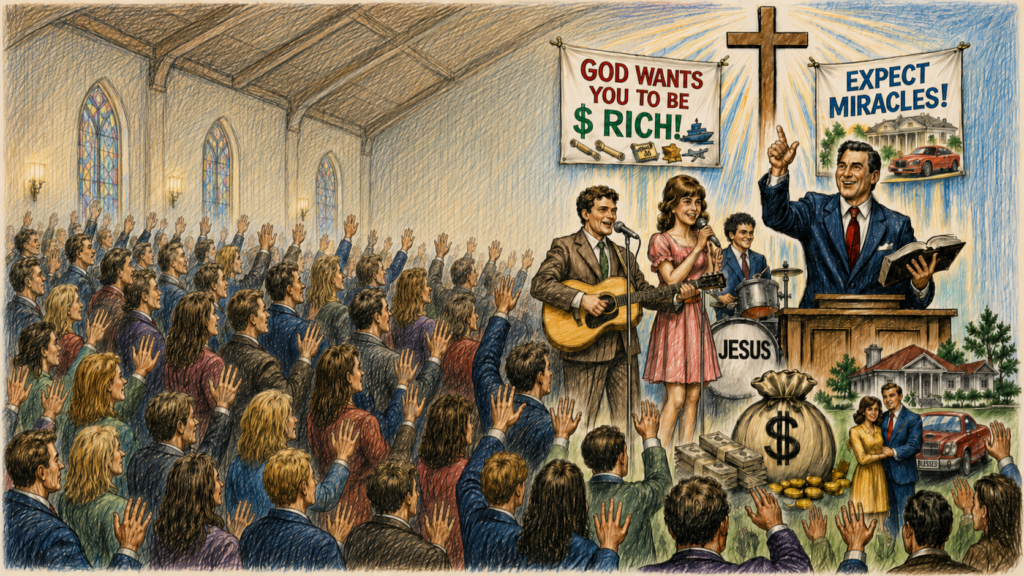
General Booth focused on that which would excite and startle the audience. Preaching about Christ weeping over sinners did not stir the hearts like hellfire and judgment. “When I preached about the harvest and the wicked being turned away,” he said,“numbers came. We must have that kind of truth which will move sinners.”186 (p19) Today, unlike in General Booth’s time, focusing on God’s love, personal healing and prosperity is what draws the crowds. This is the focus of our lyrics. But it is not the whole story. Our lyrics must accurately reflect the harmony of Scripture, otherwise we are telling a distorted story. How do we lead people into a personal relationship with Christ if we do not first teach them who He is? If our music only teaches of a saviour who saved us and our sermons are teaching the same, we end up with a distorted understanding of Jesus. Distinctive beliefs and doctrines show us who Jesus is and how to have a personal relationship with Him.
Noah preached an unpopular message. Jeremiah was scorned for the message he preached. Jesus lost many followers by teaching unpopular truths. He did draw a large crowd and won over many disciples when He fed the five thousand. The next day, as he taught deeper truths in the synagogue, He said:
“He who eats My flesh and drinks My blood abides in Me, and I in him. As the living Father sent Me, and I live because of the Father, so he who feeds on Me will live because of Me. This is the bread which came down from heaven – not as your fathers ate the manna, and are dead. He who eats this bread will live forever.” (Jn 6:56-58)
Many of his followers found this too hard to swallow and “From that time many of His disciples went back and walked with Him no more (Jn 6:66).” Jesus did not manipulate people to His side by telling the people what they wanted to hear. He told the plain truth, knowing that His true followers would accept it: “All that the Father gives Me will come to Me, and the one who comes to Me I will by no means cast out (Jn 6:37).” “For Jesus knew from the beginning who they were who did not believe, and who would betray Him (Jn 6:64).” Likewise, it is our job only to teach and preach the truth in calmness, meekness and love in the fear of the Lord and God’s people will accept the truth as they are guided by the Spirit. Songs may not sell as well when they focus on a broad range of doctrinal beliefs, but this is the cost of being true to Jesus’ teachings.
Keith Getty and his wife, Kristyn have made it their life goal to produce modern hymns with lyrical density and breadth and depth. The aim is to push values into the global church through hymns that teach the Bible and build deep believers for the global church. Luther faced a population that was theologically illiterate. Scripture and hymns had previously been in Latin.8 Jonathan T. Knight describes how, “From the beginning, Luther’s goal as a musician and a reformer was not musical distinctiveness but theological integrity.”8 (p51)
Getty says we are in a world of first, second and third generation Christians who have no Christian hymn heritage. He goes on to say:
“We are now in a phase that we’re being told that young kids that don’t know that much should lead the singing out the front because it’s all about sincerity and because they can sing and the church has to look young because otherwise all the kids are going to go out and smoke and leave the church. So, you get this combination of immaturity leading it with no theology of why you sing and then the pressures of Wall Street putting stuff to them on the internet and saying this is what you’ve got to sing next.”465
While we should involve young people in worship programs and get them up the front in church, there is wisdom in Getty’s concern that there is too much focus on image rather than Scriptural integrity. Church leaders with theological training or experience should be the ones vetting worship songs to ensure they are theologically sound, balanced and convey an appropriate message for the congregation.