
Harmonising with God in Our Music and Practices
Part 9 - Non-Sacred Music
Chapter 30
Chapter 30
Secular Music

When Joshua came down the mountain with Moses, he heard what sounded like the noise of war in the camp. It was, actually, the sound of singing and merrymaking as the Israelites danced before the golden calf. Apparently, there was something distinctive about the sound that aroused Joshua’s curiosity. What was the source of this unusual sound? As they approached the camp, the cause of the commotion was revealed. The reason it sounded out-of-place is because the activity they were involved in was out-of-place. Holiness cannot dwell with wickedness (Ps 5:4). We are either with God or against Him (Matt 12:30). Paul says:
“Do not be unequally yoked together with unbelievers. For what fellowship has righteousness with lawlessness? And what communion has light with darkness? And what accord has Christ with Belial? Or what part has a believer with an unbeliever? And what agreement has the temple of God with idols? For you are the temple of the living God.” (2 Cor 6:14-16)
When we worship idols, we are worshipping demons (1 Cor 10:20). Paul said that fornication, uncleanness, passion, evil desire, and covetousness is idolatry (Col 3:5), therefore, when we participate in these things we are uniting with evil spirits. The fruits of the Holy Spirit are love, joy, peace, patience, kindness, goodness, faithfulness, gentleness and self-control. By contrast, “out of the heart of men, proceed evil thoughts, adulteries, fornications, murders, thefts, covetousness, wickedness, deceit, lewdness, an evil eye, blasphemy, pride, foolishness (Mk 7:21-22).” The wise man is guided by God’s Word and His Spirit, whereas, a fool is guided by his own heart. Paul says, “the natural man does not receive the things of the Spirit of God, for they are foolishness to him; nor can he know them, because they are spiritually discerned (1 Cor 2:14).” That is why “It is better to hear the rebuke of the wise than for a man to hear the song of fools (Ecc 7:5).” It is why everything we do must be guided by the Holy Spirit. Job lamented that the wicked sing with instruments as they prosper yet reject God (Job 21:12-15).
Anything that does not come from wise people who are led by God’s spirit will be tainted with evil. God should be included in everything we say and do, including what we listen to. Jesus did nothing apart from the will of God (Jn 5:19). By definition, secular music dwells on topics without including God. In secular music, God’s laws are continually attacked, including: promiscuous sex and lust, covertness, drunkenness and intoxication, taking God’s name in vain, dishonouring of parents, lying and cheating, idolising a person, materialism, pride, envy and revenge. Paul Hamel, former chairman of the Music Department at Andrews University said, “An individual cannot invite into his body temple both the Holy Spirit and the kind of music dominated by non-Christian ideals.”9 (p61)
Hamel stressed that “There are no Biblical records of the Israelites’ singing any songs other than those that would serve to strengthen their connection with God.”9 (p116) This is true when they were being faithful to God, but in a time of unfaithfulness, one of the sins God rebuked the Israelites for through the prophet Amos was the singing of idle songs for themselves, instead of making music for the glory of God, as David did (Amos 6:5). John wrote:
“Do not love the world or the things in the world. If anyone loves the world, the love of the Father is not in him. For all that is in the world—the lust of the flesh, the lust of the eyes, and the pride of life – is not of the Father but is of the world. And the world is passing away, and the lust of it; but he who does the will of God abides forever.” (1 John 2:15-17)
The music of this world gratifies the lust of the flesh, the lust of the eyes and the pride of life.
Having said that, secular music comes in many forms and some types of secular music may put us in a frame of mind to contemplate God. There were a few occasions in which Mrs White attended secular professional music performances which impressed her.9 (p34) Paul Hamel says that she did not condemn music simply because it was secular. She enjoyed listening to a variety of secular music, particularly classical music. “She readily recognised that music could be relaxing and entertaining,” Hamel describes, “and that music other than church music was worthy of a Christian’s time and attention.”9 (p63)
However, popular music, by definition, appeals to the masses, often by its crudeness and lack of sophistication. Popular songs have always been a problem for those who are concerned with moral principles. Popular and dramatic arts have a history of being at the cutting edge of immorality, constantly pushing the boundaries and getting away with whatever sponsors and consumers will allow. Ancient popular songs were often as indecent as pop songs today – even the images attached to songs found in ancient manuscripts.9 (pp34-35,49,72)
Down through the ages, even before Christ, there have been political and religious leaders who were concerned about the effects of popular music on their societies. Mrs White was appalled by the popular music of her day. Martin Luther was another religious leader who was determined to lead young people away from love ballads and carnal songs:
“And these songs were arranged in four parts to give the young – who should at any rate be trained in music and other fine arts – something to wean them away from love ballads and carnal songs and to teach them something of value in their place.”7 (p316)
Popular music of the late 1800s, including ragtime, led to the jazz music of the 20th century.9 Though General Booth was in favour of secular style music when put to Christian lyrics, he was opposed to worldly leisure – Salvationists were horrified with most forms of working-class amusements, even more so than many of their contemporary Christians.2 He worked amongst the poorest people of London and saw the outcome of the secular entertainment industry and strove to pull people out of that world. General Booth criticised not only alcohol and gambling because of the poverty, neglect and violence it brought on individuals and families, but he also criticised the wider culture of leisure that gloried in drinking and gambling – including theatres and music halls. The culture taught men that drinking and gambling was masculine and made them real men. Salvationists strove to convince men that drinking made them dependent and foolish2 and that worldly leisure had to be discarded if they were to properly care for their families.
The lyrics of popular music, including ragtime, in General Booth and Mrs White’s time was just as crude as it is today. There were few inhibitions and a plethora of popular songs were circulating which were openly pornographic. Lyrics spoke of the stupidity of morals, heroines were praised, alcohol glorified and black people slurred.9 Hamel explains that:
“Those who influence popular musical programming for monetary reasons are chiefly interested in attracting as large an audience as possible – and the masses to which their entertainment appeals are not generally concerned about eternal values as contained in the Bible.”9 (p65)
Of the opera, Mrs White commented:
“The opera, with its fascinating display and bewildering music, the masquerade, the dance, the card table, Satan employs to break down the barriers of principle and open the door to sensual indulgence. In every gathering for pleasure where pride is fostered or appetite indulged, where one is led to forget God and lose sight of eternal interests, there Satan is binding his chains about the soul.”195 (p459)
What could be so harmful as to incite such condemnation of opera? Hamel helps us out here with some context:
“In general, one finds in operas an emphasis on violence, passion and love – the latter often illegitimate. It is upon these ingredients that the opera depends for its appeal and very few operatic works have had lasting success unless they have had generous amounts of these unfortunate elements.
Opera is the most highly communicative of the arts. In it are combined music, drama, poetry, literature, dancing, staging and costuming, representing an impact upon the human senses that is overwhelming in its totality… An impression tends to be more lasting when it is intensified by such a brilliant setting. To see an opera is to always remember it…
…Some of the plots revolve almost entirely around marital infidelity and sexual freedom. For purely comic effects, many of the emotional scenes are grossly exaggerated. Comparably, the operas of Richard Wagner were largely based on Germanic myths…”9 (pp68-9)
What more needs to be said? This sums up convincingly why any Christian should be concerned with this type of performance. It might be added that live pop and rock performances with overwhelming sensory assault from amplified music, lights, smoke, video, dance, lewd costume, bright colours and theatrics with often sexual, violent and passionate themes, might have a similar profound and lasting effect on those present.
Mrs White felt a very special concern for the effect of secular music on young people. Of the youth, she wrote that they:
“…have a keen ear for music and Satan knows what organs to excite to animate, engross and charm the mind so that Christ is not desired… I was shown that the youth must take a higher stand and make the word of God the man of their counsel and their guide. Solemn responsibilities rest upon the young, which they lightly regard. The introduction of music into their homes, instead of inciting to holiness and spirituality, has been the means of diverting their minds from the truth. Frivolous songs and the popular sheet music of the day seem congenial to their taste. The instruments of music have taken time which should have been devoted to prayer.”
She does not divide popular music into categories but makes a blanket statement against frivolous songs and popular sheet music. She goes on to explain how music can be a great blessing, but when put to wrong use, it is a terrible curse:
“It excites, but does not impart that strength and courage which the Christian can find only at the throne of grace while humbly making known his wants and with strong cries and tears pleading for heavenly strength to be fortified against the powerful temptations of the evil one. Satan is leading the young captive. Oh, what can I say to lead them to break his power of infatuation! He is a skilful charmer, luring them on to perdition.”193 (p497)
For amusements in general, Mrs White advises that they should be decidedly influenced by our religious beliefs:
“Young men and young women should not think that their sports, their evening parties and musical entertainments, as usually conducted, are acceptable to Christ. Light has been given me, again and again, that all our gatherings should be characterised by a decided religious influence.”499
Amusement is often used as a means to attract young people to church events. However, Mrs White warns of the devil’s cunning:
“Oh, what art, what skill, what cunning, is exercised to lead the professed followers of Christ to a union with the world by seeking for happiness in the amusements of the world, under the delusion that some good is to be gained!”188 (p143)
During Jesus’ time, Herod had built theatres for entertainment in Palestine. Jesus did not counter legalism and dry formalism by encouraging His followers to attend amphitheatres or other secular entertainment. Neither did he suggest that joy should be sought from popular amusements or sports events.
Mrs White said we should never enter a place of amusement if we cannot invite the presence of the Lord, even to witness for Him:
“You will be invited to attend places of amusement, and then it will be that you will have an opportunity to testify to your Lord. If you are a true Christian then, you… will plainly and modestly declare that you are a child of God, and your principles would not allow you to be in a place, even for one occasion, where you could not invite the presence of the Lord.”500
Elsewhere, she provides a helpful test for the appropriateness of a venue of entertainment:
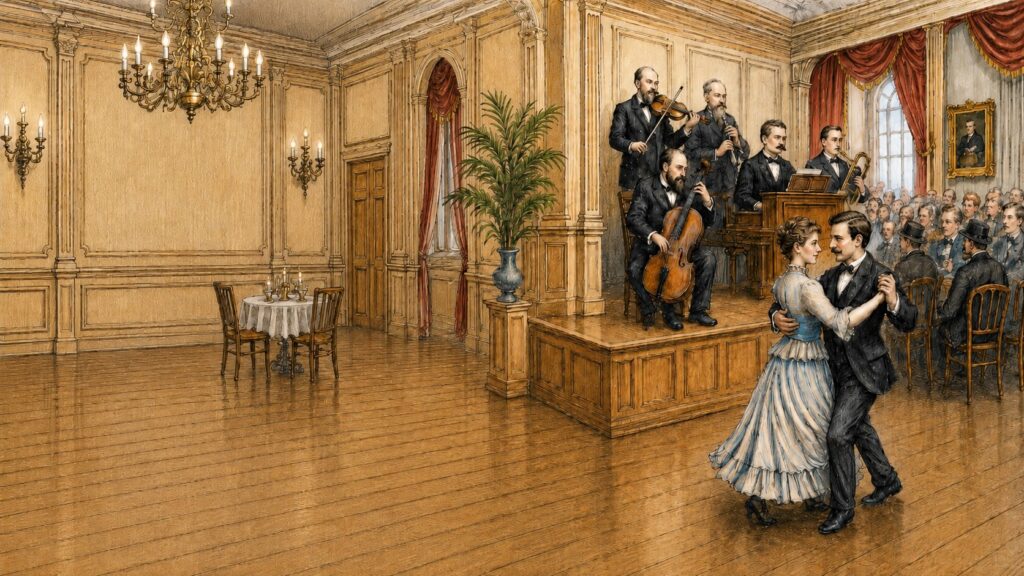
“By the frequenters of the ballroom God is not an object of thought and reverence; prayer or the song of praise would be felt to be out of place in their assemblies. This test should be decisive. Amusements that have a tendency to weaken the love for sacred things and lessen our joy in the service of God are not to be sought by Christians.”195 (p707)
Mrs White insists, instead of spending time in unhealthy amusements, we should be using the time for God’s service:
“The hours so often spent in amusement that refreshes neither body nor soul should be spent in visiting the poor, the sick, and the suffering, or in seeking to help someone who is in need.”16 (p276)
Likewise, James advises that “Pure and undefiled religion before God and the Father is this: to visit orphans and widows in their trouble, and to keep oneself unspotted from the world (Jas 1:27).”
Three Examples: Pink, Coldplay & U2
One of the most popular touring singers of 2023-24 was Pink, grossing almost US$700 million and selling over 4.8 million tickets across three continents, including North America, Europe and Oceania. The Summer Carnival tour was the second-highest grossing tour in history among women, and she was No. 1 on Billboard’s monthly Top Tours chart for October 2024.501 Much of Pink’s early recognition was gained from her part in the 2001 version of Lady Marmalade, famous for the French refrain of ‘Voulez-vous coucher avec moi, ce soir?’ which translates as ‘Do you want to sleep with me, tonight?’ The song was accompanied by a sexually explicit video clip. She is described as Pop Royalty, and her pop rock style is popular amongst children, teens, youth and adults alike.502 She has sold over 135 million records worldwide, making her one of the world’s best-selling music artists.
Pink was influenced by pop stars such as Madonna, Janis Joplin and Linda Perry and, in turn, has inspired numerous artists, including Katy Perry, Christina Aguilera, Demi Lovato, Adele, Julia Michaels and Dua Lipa. Her influence is extensive. Glamour Magazine wrote of her: “Pink changed the game. Without her, the last 13 years of big-voiced, tough chick music is hard to imagine.”503 Children, pre-teens and teenagers are aware of Pink – they have seen and heard her on magazines, radio and MTV and in the remake of the film Rollerball. According to The Center for Parent Youth Understanding, she has become a poster girl for millions of her young peers. Rolling Stone’s Rob Sheffield calls Pink’s Can’t Take Me Home a sexy teen-pop disco cruise.502The message that Pink is giving all of these people is worldly, promiscuous and ungodly. Regardless, Mark Powell, theology professor at Trinity Lutheran Seminary, thinks that rock and roll, including secular and Christian rock, “has done a lot more for the good of humanity in the last thirty-plus years than all the theologians on the planet!”5 (p7) In Blow Me (One Last Kiss), Pink sings:
“I’ll dress nice, I’ll look good
I’ll go dancing alone
I will laugh, I’ll get drunk
I’ll take somebody home”504
One of Pink’s most popular songs, which she sang during her 2024 Summer Carnival Tour, is the number one hit from 2008, So What. The first three stanzas of this song reads as follows:
“I guess I just lost my husband
I don’t know where he went
So I’m gonna drink my money
I’m not gonna pay his rent (Nope)
I got a brand new attitude
And I’m gonna wear it tonight
I wanna get in trouble
I wanna start a fight
Na-na-na-na, na-na, na
I wanna start a fight
Na-na-na-na, na-na, na
I wanna start a fight!
So, so what?
I’m still a rock star
I got my rock moves
And I don’t need you
And guess what?
I’m having more fun
And now that we’re done
I’m gonna show you tonight”505
Her attitude to breaking up with her husband is to get drunk, get into trouble, look for a fight, boast about her fame, to not care and just have fun. This is typical of the kind of advice that we receive from secular music artists. It is foolish. What we should do in this situation is to turn to God for wisdom and support, seek godly counsel and find out what went wrong and how to repair the broken relationship.
In his interview with the Christian band, Newsboys, Sean McDowell gives an example of a friend who was a musician who gave up his faith in Christianity, partly because he realised he could have the same experience of God at a Coldplay concert as a Christian rock or pop concert. In reply, lead singer of Newsboys, Michael Tait, said, “Coldplay, I believe it is worship, for me. I love Coldplay.” He agrees that they are not Christian and their music is not suitable for church, but he still believes their music is a form of worship and that it is amazing music. He goes on to say:
“…worship to me is you loving your wife… hearing a song – it could be a U2 song – that could put your eyes and thoughts on God. Who’s to say what worship is.”
Keyboardist of Newsboys, Jeff Frankenstein, adds:
“…there’s no denying that, whether you’re a Christian artist or non-Christian artist, the gifts of music and bringing it together, that creativity comes from the Creator. You can’t deny it. Some songs are just so beautiful and so well done and so well put together – if it’s good art it’s good.”187 (38:27)
To these Christian artists, if the music sounds good, whether it be Coldplay or U2, then it must be from God and it is good for us, even for worshipping God.
Let’s take a closer look at these two secular rock bands – Coldplay and U2 – as examples to see if they are truly good and if they are likely inspired by God, as suggested by Tait and Frankenstein. Coldplay was the highest-grossing rock tour of 2024, while U2 was ranked fourth on Billboard Boxscore’s top 10 rock tours that year.506 At first glance, they both seem to be decent bands, supporting charities, promoting peace and goodwill in the world and even making numerous references to God. Lead singer of Coldplay, Chris Martin, does not drink alcohol or use illicit drugs. One of the songs he sings is called We Pray. Much of the lyrics of this song would make a good hymn for church. For example, halfway through the sixth stanza, it goes:
“Pray that we speak with a tongue that is honest
And that we understand how to be modest”
So far, you could say this song is good. It would be great if we upheld God’s law by singing more about honesty in church. Unfortunately, the song is not all good. The very next two lines goes:
“Pray when she looks at herself in the mirror
She sees a queen, she sees a goddess”
As we dig deeper, we will see that spiritualism is a strong theme of Coldplay’s music. Elsewhere in the song, he sings:
“Pray I speak my truth”507
Unfortunately, this is unacceptable for Christians. We are not to speak my truth but God’s truth. Only Jesus is the way, the truth and the life (Jn 14:6). Chris describes himself as an alltheist, meaning that God is present in everything and everyone. God is found in love and in every molecule, he believes. As we dig deeper into Coldplay’s music, much is discovered that is against God and His law. In their first hit album Viva La Vida and All His Friends, the sixth song in the album is called Yes, and is about someone’s desire to have promiscuous sex:
“Sin, stay gone…
If you’d only, if you’d only say yes
Whether you will’s anybody’s guess
God, only God knows she won’t let me rest
But I’m just so tired of this loneliness
I’ve become so tired of this loneliness”508
Newsboys lead singer feels that Coldplay’s music is worship for him. The keyboardist for Newsboys defines good music as music which is good art. However, with just a cursory look at the lyrics of Coldplay’s music, it appears that this criterion is not satisfactory. Hamel provides an alternative criterion. When it comes to the appropriateness of musical entertainment, he suggests asking several questions:
“Can Jesus and the holy angels accompany me while I am listening to this live or recorded musical performance?
Are the words those that could comfortably be repeated by a Christian in the presence of Jesus?
Do the words suggest only thoughts and actions that are wholesome?
Does the music cause a physical excitement that seems to be incompatible with the life a Christian should be leading?
In what kind of places is this type of music generally found?
What has been the influence of this music and of the groups performing it?
What about the design and pictures on the record jacket?”9 (p63)
After answering these questions, you should have a pretty good idea of the spirit behind the music. The spirit that inspires the artist to take illicit drugs or to design an album cover with crude or satanic imagery is likely to be the same spirit that inspires the artists lyrics and music.
Coldplay’s albums are very thematic. The very next song in the album after Yes is Viva La Vida, by which the album is titled. The artwork on the album cover is the 1830 painting Liberty Leading the People by Eugène Delacroix. The prominent figure in the image and looming larger than life is the Goddess of Liberty. The painting depicts the French revolution of 1830 which, like the 1789-99 revolution, was designed to harm the political and religious systems. The song, Viva La Vida, is filled heavily with spiritual themes. Here are some examples:
“I used to rule the world
Seas would rise when I gave the word
Now in the morning, I sleep alone
Sweep the streets I used to own…
Oh who would ever wanna be king?
I hear Jerusalem bells a-ringin’
Roman Cavalry choirs are singin’
Be my mirror, my sword and shield
My missionaries in a foreign field
Revolutionaries wait
For my head on a silver plate
Just a puppet on a lonely string…
I know Saint Peter won’t call my name
Never an honest word
But that was when I ruled the world”509
There is much speculation about the meaning of these spiritual references. However, the reference is to someone who used to rule the world, who controlled the seas and had missionaries in foreign fields – all have strong parallels to Jesus Christ but He is depicted as a defeated foe. The implication is that Jesus lost his sovereignty which was one of the goals of the French revolution. The age of reason was established and the people liberated from religion. Is this inspired by God? If not, where did the inspiration come from?
Spiritual references in the arts often give Christians the impression that it must be okay to watch or listen to. We justify watching movies filled with violence, materialism, immorality and misuse of God’s name, by citing the Christian themes. However, what may appear to be Christian on the surface is actually often Gnostic, New Age or occult themes teaching a distorted view of God. More and more, we see Gnostic concepts coming through in movies and music. Marvel movies is a classic example. In Avengers: Infinity War, the tyrant, Thanos, is referred to as ‘I AM,’ a title for God in the Bible (Ex 3:14). To save humanity, Thanos has to destroy half of them. To achieve this, he has to kill his adopted daughter, Gamora. Before her father kills her, this is what Gamora says to him:
“You kill and you torture – you call it mercy. The universe has judged you… You failed. Do you want to know why? Because you love nothing, no one… No, this isn’t love.”510
There are clear parallels between Thanos and God: they are both called ‘I Am’; God will destroy the wicked and save the righteous; Thanos is to destroy half of the inhabitants of the world to save humanity; to save humanity, God sent His son to earth to die; Thanos killed his adopted daughter in order to achieve his purpose of saving humanity; God’s actions are considered an act of mercy; Thanos also believes his actions are an act of mercy. However, Gamora argues that Thanos is the villain who loves no one. The implication is that God is not really loving and merciful for destroying the wicked and allowing His son to die on the cross to save the righteous – He is actually an evildoer who loves nobody. There are strong Gnostic themes coming through in the film here.
Movies that contain what appears to be Christian themes, often bring deception into the home. Likewise, when Christian content is found in secular music, it often misrepresents God or gives a distorted understanding of Him. Secular artists usually get their inspiration from sources contrary to Christian beliefs and this flavours the content of their work.
Paul said, “do not be conformed to this world, but be transformed by the renewing of your mind, that you may prove what is that good and acceptable and perfect will of God (Rom 12:2).” Secular entertainment produced by people opposed to God and His moral code is certain to be tainted with evil. We are to be in the world but not of the world (Jn 17:15-16). Bringing worldly music and entertainment into the church allows opportunity for the devil to wedge his way in.
In 1902, the Seventh-day Adventist Church learned a powerful lesson from mixing church work with worldliness. By this time, the Review and Herald Publishing Company had grown very large and prosperous. Much of the profit, however, was coming from the publishing of secular materials. Messages of warning were repeatedly sent to the managers of the printing house of the evils and dangers of bringing worldliness into the printing work. In January 1898, Mrs White wrote to Uriah Smith, editor of the Review:
“The publishing house has been turned into desecrated shrines, into places of unholy merchandise and traffic. It has become a place where injustice and fraud have been carried on, where selfishness, malice, envy, and passion have been borne sway. Yet the men who have led into this working upon wrong principles are seemingly unconscious of their wrong course of action.”270 (p232)
She said that she received testimony from God and that the office must be purged of the objectionable matter. A few years later, in November 1901, she wrote:
“I have been almost afraid to open the Review, fearing to see that God has cleansed the publishing house by fire.”47 (p91)
The ‘objectionable matter’ was not removed and, in fact, 1902 was one of the most prosperous years for the publishing company. Consequently, as Mrs White slept restlessly in her Elmshaven home 4.5 thousand kilometres away, her worst fear, the prediction of that cleansing fire, came true:
“On December 30, 1902, the publishing house was totally destroyed by fire of an unknown origin. Within an hour of its discovery, at 7:25 p.m., by employees working the night shift, the entire four-story structure was a mass of blazing ruins. Nothing of value was saved. The machinery, furniture, printed books and periodicals, paper stock, and other materials were a total loss.”511 (p7)
The publishing house that James White and other pioneers had worked so tirelessly to build up all those years earlier had been reduced to a pile of rubble. This is a lesson to us all that we must work tirelessly to keep worldliness out of the church.
As with Pink, Coldplay promotes promiscuous sexuality and is symbolic of their rejection of God’s law. Society’s obsession with sex has distorted our understanding of marriage. Attraction is only a superficial aspect of relationships. Whatever it is we think in today’s world is important for relationships, it is not working. The high divorce rate is testament to that. The emphasis in the media on physical attraction, sexual compatibility, cohabitation, premarital sex and the liberated lifestyle has not strengthened relationships but weakened them. Our culture overemphasises and overvalues sexual fulfilment.
A healthy loving relationship is primarily based on a deep care for one another and an appreciation for each other’s character and godly lifestyle. Wonderful examples include successful loving marriages which begin by parental arrangement and elderly couples who adore each other despite the effects of ageing. There is also the partner who continues to care for his loved one through major illness or injury. What keeps these people thriving in their relationships? It’s a deep and loving concern for one another and determination to make the relationship work despite all the obstacles – and a commitment to following God’s way.
Not all Seventh-day Adventists agree with the church’s official position on sexuality. For example, the editor of Pulse magazine is a Seventh-day Adventist pastor, and he calls for Seventh-day Adventists to embrace homosexuality. One of the contributors of ‘Pulse’, an author and employee of the Seventh-day Adventist Church, admires the Irish rock band U2, stating that it has been a formative part of his life, faith and activism. He was introduced to U2 by a traveling preacher who visited his public high school. There is no doubt that this author is sincere in his Christianity, and he is passionate about serving people; however, an examination of U2 and its lead singer Bono will quickly reveal why shepherds of our church should not be getting inspiration for their life and faith from worldly entertainment.
In the last two stanzas of U2’s hit song, I Still Haven’t Found What I’m Looking For, Bono sings of Jesus as follows:
“You broke the bonds
And you loosed the chains
Carried the cross of my shame
Oh my shame, you know I believe it
But I still haven’t found what I’m looking for”512
Bono believes Jesus died for Him, but, sadly, he ‘still hasn’t found what he is looking for.’ Bono, a married man, will frequently pull up a girl from the audience onto the stage, dance and embrace intimately with her, even lie down with her on stage and kiss her on her lips.
Before pointing the finger at others, we must scrutinise our own lives. What immorality are we allowing into our lives? If we’re watching, listening to and thinking about ungodly things, we’re at great risk of being guided by a spirit that will lead us to misinterpret Scripture. Only God knows the true heart and intentions of Bono, but his lifestyle does not reflect a truly converted heart. Bono should not be our source of inspiration any more than Donald Trump, also a professed Christian, should inspire our faith and life (Jas 4:4).
Pastors, teachers, authors and other spiritual guides in our church should not be receiving inspiration from the world. We must remain pure, unadulterated, true followers of God – true to His Word, true to His commandments, true to his commission – everything else must be rejected. Our inspiration must come from none other than Jesus Christ. If we are single, Jesus challenges us to put aside lustful thoughts. If married, we are to remain faithful to our spouses. If our spouse has a sexual impairment, we are still to remain faithful. If we have gay tendencies, we are to remain faithful to Jesus. If we are to be put in prison for our faith and lose all our freedom, we must take up our cross and accept imprisonment. It’s not about us but about Jesus and His will, for He laid down His life for us all.