
Harmonising with God in Our Music and Practices
Part 6 - Intensity
Chapter 21
Chapter 21
Effects of Loud Music

Hearing Loss
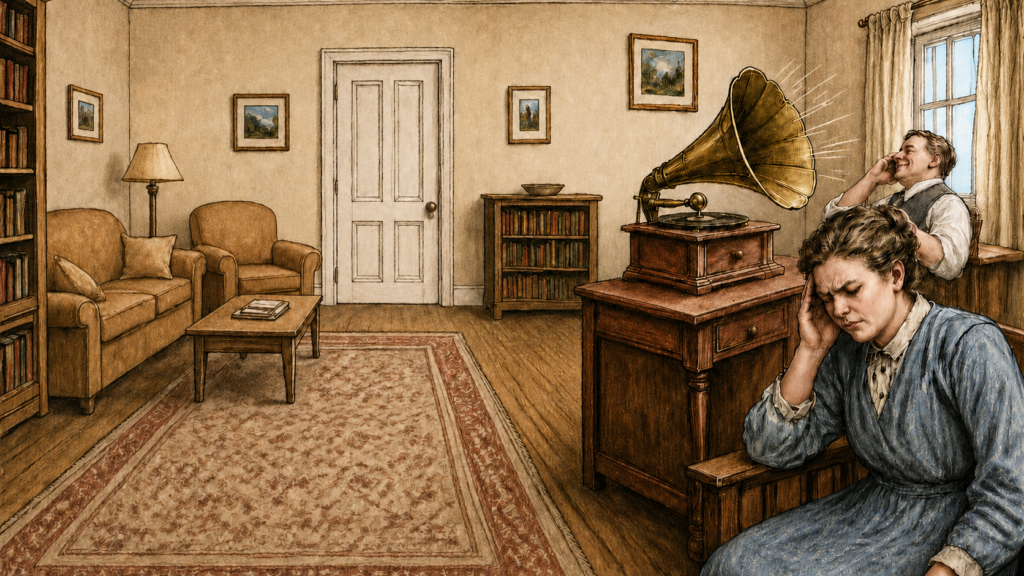
Hearing loss is a well-known adverse effect of loud sound. People often view the effects of loud music on our ears as a trivial matter, but it can have debilitating consequences, including significant hearing loss and tinnitus, the sensation of sound (e.g. ringing, buzzing or hissing) in the absence of an external sound source. When sound waves reach the ear, they travel down the canal to the eardrum, causing hair cells (sensory cells) within the cochlea to move. The hair cells convert the vibrations into electrical nerve signals that travel along the auditory nerve to the brain. Regular exposure to loud noise causes hair cells to lose their rigidity. Also, during a period of intense exposure to loud sound, the level of free radicals in the cochlea increases, causing hair cells to die. These physiological changes result in reduced hearing sensitivity and/or tinnitus. We are born with a fixed number of hair cells in the cochlea and, once they have been damaged, they do not regenerate.
The factors that determine the level of risk of hearing loss are the loudness and duration of noise exposure. The effect of lower volumes heard for long periods of time is the same as louder sounds heard for a short period. Repeated exposure to excessive noise long-term, as well as a single exposure to an extremely intense sound, causes irreversible noise-induced hearing loss. Greater than 15 minutes of music at 100 dB may cause equivalent hearing damage to an industrial worker exposed to 85 dB of machine noise for greater than 8 hours. Just 2 hours of 90 dB of noise per day may cause permanent hearing damage, while sounds greater than 112 dB can cause immediate damage. A Levite trumpet player occasionally exposed to a short trumpet burst of 100 dB would not sustain permanent hearing loss. However, in a modern setting, when loud drums are sustained throughout worship coupled with amplified instruments and singers, the noise exposure is significant, especially with the additive effect of other recreational, occupational and environmental noise exposure throughout the day. The hearing loss is usually slow in onset but progresses relentlessly if repeated exposure persists.
The initial hearing loss is usually subtle, involving only the higher frequencies, and may go unnoticed. Eventually, lower frequencies are affected, interfering with day-to-day activities, including conversation and communication. Research has shown a strong correlation between recreational noise exposure and tinnitus. Both hearing loss and tinnitus can lead to sleep disturbance, anxiety, depression and impaired concentration and communication, significantly impacting quality of life.
Presbyacusis refers to hearing loss due to the natural process of aging and is common in people over 60 years old. Noise exposure is more harmful to hearing than aging-related hearing loss and can accelerate hearing deterioration in later life, even after the exposure has ceased. Some people may be more susceptible to noise-induced hearing loss than others. There is no medical or surgical cure for noise-induced hearing loss and treatment is limited to hearing aids and counselling, which is often inadequate. Prevention is the most effective strategy.377
Exposure to loud noise is becoming increasingly prevalent in environmental, occupational and recreational settings, including traffic, machines, concerts, live sporting events, fitness classes, cinemas, nightclubs, personal music players and video game consoles. Children and teenagers are likely the most at risk from exposure to loud sounds associated with recreational activities. Noise exposure is often not from a single recreational source.
Global and regional trends in disabling hearing loss are increasing significantly.404 (p5) Between 1994 and 2006, the prevalence of hearing loss among teenagers rose from 3.5% to 5.3%.377 Results of a United States meta-analysis in 2024 indicates that the prevalence of hearing loss in college students is 19%. The hearing loss in these students was reported to be significant enough to decrease attention, comprehension and memory, reducing their likelihood of succeeding in college.405 It is predicted that hearing loss in Australia will increase to greater than 25% of the population in the next 25 years.404 (p4)
If noise-induced hearing loss is perceived as an insignificant threat, the motivation to avoid exposure to loud noise is reduced. If church prioritises enjoyment over safe listening, young people might perceive loud music listening as normal and acceptable. If an individual’s attitude is that loud music is enjoyable and that it is a normal part of life, it is likely to hinder safe listening practice.377 Church members, including young people, may be exposing themselves to loud noise in their own free time, as well as at church events, increasing their total exposure time and risk of permanent damage.
Strategies for prevention of harm from exposure to loud sounds are not just the responsibility of individuals but also communities – including churches. The recommended safe volume level is below 85 dB. Based on this figure, it is likely that the majority of worshippers in Israel were exposed to safe levels of noise, whereas worshippers in modern settings with contemporary Christian music are often exposed to unsafe levels of noise. The sound is likely too loud if other people must raise their voice to make themselves understood or if it is difficult to understand someone an arm’s length away.377
Non-auditory Effects of Loud Noise Exposure
It is becoming increasingly recognised that hearing loss is not the only adverse health outcome of loud music. Evidence for non-auditory effects of loud noise exposure on health is growing. Because of the widespread exposure to noise in modern society, the adverse effects are diverse, serious and very prevalent. Barry Blesser cites findings from a number of studies which have shown adverse effects of loud music, including an increase in alcohol consumption, overeating, maladaptive behavioural patterns consistent with substance abuse and overstimulation of children with ADHD. Research has also shown evidence of the presence of chemicals associated with schizophrenia in the brains of people exposed to high level sounds.385 (p5)
Noise pollution is a well-recognised health concern. Dr Arline Bronzaft, expert in the general and mental health effects of noise for more than five decades, says:
“Noise pollution is more than just a nuisance. Researchers have found that noisy environments can take a real toll on people’s mental and physical health.”
Studies have shown that noise exposure leads to annoyance, impaired cognitive performance in school children, disturbed sleep, hypertension and cardiovascular disease.406 By contrast, Bronzaft says:
“…quiet enhances health. I didn’t say silence because I still want to hear birds. I still want to hear the air blowing, and I still want to hear the babbling of young children.”407
Probably an even more important issue than the impact of noise on the health of church members is its effect on the neighbouring community. Research has firmly established the adverse effect of noise pollution on both general health and mental health.399 It can interfere with daily activities, feelings, thoughts, sleep or rest, and might be accompanied by negative responses, such as anger, displeasure, exhaustion and by stress-related symptoms.406 Research has repeatedly shown that noise exposure increases blood pressure and heart rate and causes the release of stress hormones. Preliminary research suggests that long-term exposure to environmental noise affects the cardiovascular health of individuals, including hypertension, ischaemic heart disease, and stroke.406 Chronic noise exposure in children has been shown to lead to learning disabilities, anxiety, attention-seeking behaviours, lowered academic performance as well as reduced motivation and concentration.377
Immanuel Kant (1724-1804), one of the most influential figures in modern Western philosophy, in his book, Critique of Judgement, said:
“…music has a certain lack of urbanity about it. For, depending mainly on the character of its instruments, it extends its influence (on the neighborhood) farther than people wish, and so, as it were, imposes itself on others and hence impairs the freedom of those outside of the musical party.”408 (p200)
He said this long before modern recording and amplification projected music much further and more frequently into the community. While church attenders enjoy their own worship music, amplification can bring the music into the public sphere where it may be experienced as pollution by those who do not appreciate it.
On one occasion, the Salvation Army Corps in Oxford Street, London, brought a charge against a man who disturbed their meeting with shouting and screaming. When the man was summoned before the court, the residents of Oxford Street threatened to file an action against the Army in retaliation for the disturbance it was causing in the community – including the intolerable shouting, raving and playing of brass bands! In support of the residents, the presiding magistrate suggested that the Salvation Army had more in common with the rabble disturbing its meetings than with the respectable residents of Oxford Street!2 (p199) It would do us well as a church to follow the advice of Bronzaft:
“…be respectful, be aware that your sounds may not be wanted by others.”407
The last thing we want to do as a church is annoy the neighbours and detrimentally impact their health.
Barry Blesser describes how:
“Before a concert begins, you can hear the breathing of your friend sitting next to you, but after it begins, you hear nothing other than the music. Loud music makes a listener functionally deaf to everything but the music.” He goes on to say, “In a real sense, loud music transports listeners into another aural space, moving them from the social space of people to the musical space of the performers. Loud music also suppresses the internal space of daydreams, overpowering the inner space of self-generated sounds and pictures, and listeners are only in the space of the musicians. Everything else is gone. Loudness is a space transporter because you become functionally deaf to the immediate environment.”
He goes on to explain how, because we do not have ear-lids, listeners have no intrinsic biological means of controlling the dominant environmental noise. Consequently, because the auditory cortex of the brain is connected to and influences many other areas of the brain, loud sound tightly bonds us to the environment without control, he says. That is why it is often almost impossible to focus on a task when exposed to loud sounds – it is like the brain freezes up and you cannot focus.
“Loudness transports us to another world,” he says, “Advertisers who present messages before movies know that loudness sells because you cannot focus on any other sonic event. You cannot escape physically or perceptually. They own your aural space, and they know it.”
Loudness, to a large extent, is a control mechanism, he concludes, because it dominates.385 (p2-3)
The Optimum Sound Level for Congregational Worship
The Bible encourages congregational singing. The earliest example of congregational singing in the Bible is the song of praise sung by the Children of Israel after the crossing of the Red Sea (Ex 15:1-18). The epistles seldom mention music or singing, but two of the prominent passages on the topic suggest congregational singing. As part of the body into which we have been called, Paul encourages us to teach and admonish “one another in psalms and hymns and spiritual songs (Col 3:15-16).” Similarly, in Ephesians we read “but be filled with the Spirit, speaking to one another in psalms and hymns and spiritual songs, singing and making melody in your heart to the Lord (Eph 5:18-19).”
Examples of congregational singing are recorded by John of Patmos, such as Revelation 5:9 & 11-12. In the Roman Catholic Church, before the Reformation, music was restricted to the clergy and lower clergy and congregations did not participate in singing. Martin Luther is well recognised for his influential role in introducing congregational singing back into churches.8 Mrs White describes as glorious the harmony that can be produced by combining instruments of music with congregational singing.62 (p71) Scientific research has shown that singing with other people amplifies the many health benefits of singing.96
Effective congregational singing is influenced by the volume of the music. Dr David Gauger, professor at Moody Bible Institute, in a small study found that the optimum sound level to sing along to is about 81 decibels, while sound levels less than 70 dB or greater than 85-90 dB deterred congregational singing.409 Worship Leader Magazine theorises that what happens physiologically when the music exceeds 90 dB is that people cannot hear others or themselves singing, so they become spectators and the worship team is reduced to a ‘performance troop.’410 Under 70 dB and the congregation does not feel confident to sing along as the music is too soft.409
Song worship is a problem when the focus becomes the worship leaders. Overly loud music tends to discourage congregational singing, putting the focus on the singers and musicians on stage. Paul Hamel describes a trend away from congregational singing that developed in the church in the late 1800s:
“There had been a shifting away from congregational singing to a reliance upon instrumental music and the employment of professional choirs, quartets and soloists.”9 (p71)
General Booth supported hearty congregational singing but was suspicious of choirs, organised music groups and solo singers. He did not approve of singers who stood out and became noticed. However, over time the General did become more accepting of choirs and music bands which became a prominent part of the Salvation Army corps.3 Mrs White emphasised congregational singing over the hiring of singers:
“…when singers offer their services, they should be accepted. But money should not be used to hire singers. Often the singing of simple hymns by the congregation has a charm that is not possessed by the singing of a choir, however skilled it may be.”168 (p509)
Elsewhere she encouraged congregational singing over special performances:
“There should be in the meetings nothing of a theatrical nature. The singing should not be done by a few only. All present should be encouraged to join in the song service. There are those who have a special gift of song, and there are times when a special message is borne by one singing alone or by several uniting in song. But the singing is seldom to be done by a few. The ability to sing is a talent of influence, which God desires all to cultivate and use to His name’s glory.”411 (p115)
Those who lead out in singing will often admit how exhilarating it can be and how tempting it is to put oneself in the centre of the worship experience. General Booth, aware of the potential evils of music, once said, “I have ever found choirs to be possessed of three devils, awkward, ugly and impossible to cast out. They are the quarrelling devil, the dressing devil, and the courting devil.”412 (p191) Hamel describes his experience as a musical director:
“Those who would practice music for the service of the church are counselled to engage in that work with solemnity, an unselfish attitude, humbleness and an awareness that their musical endeavours are for the praising of God and not for self-glorification.
Anyone who has directed or sung in a church choir knows how very easily the sins of jealousy and evil surmising can creep into the organisation. When someone is selected to perform a solo passage it is human nature for others to wonder, ‘Why was not I chosen for that honor?’”9 (p86)
Mrs White says, “Forms and ceremonies and musical accomplishments are not the strength of the church.”168 (p512) In The Great Controversy we read:
“Brilliancy of style is not necessarily an index of pure, elevated thought. High conceptions of art, delicate refinement of taste, often exist in minds that are earthly and sensual. They are often employed by Satan to lead men to forget the necessities of the soul, to lose sight of the future, immortal life, to turn away from their infinite Helper, and to live for this world alone.”159 (p567)
Music becomes acceptable to God only when our hearts have been sanctified and softened:
“Gorgeous apparel, fine singing and instrumental music in the church do not call forth the songs of the angel choir. In the sight of God, these things are like the branches of the unfruitful fig tree which bore nothing but pretentious leaves. Christ looks for fruit, for principles of goodness and sympathy and love. These are the principles of heaven, and when they are revealed in the lives of human beings, we may know that Christ is formed within, the hope and glory. A congregation may be the poorest in the land, without music or outward show, but if it possesses these principles, the members can sing, for the joy of Christ is in their souls, and this they can offer as a sweet oblation to God.”168 (p512)