
Harmonising with God in Our Music and Practices
By Dr Ross V. McKenzie
Introduction
William Booth, founder of the Salvation Army, was in favour of any style of music, as long as the lyrics were spiritual. He believed there was no such thing as sacred music, only sacred lyrics. This was radical for his time, but it was not the only radical practice of the Salvation Army. For example, General Booth believed we should avoid discussing distinctive doctrines. His wife, Catherine, who was a co-founder of the Salvation Army, believed there should be no distinction between the roles of women and men in the church. These practices were unorthodox and controversial at the time. This is significant for our time because the Booths were part of the Holiness movement from which Pentecostalism and the Charismatic movement emerged, and which have greatly influenced our practices today, including worship music and style.
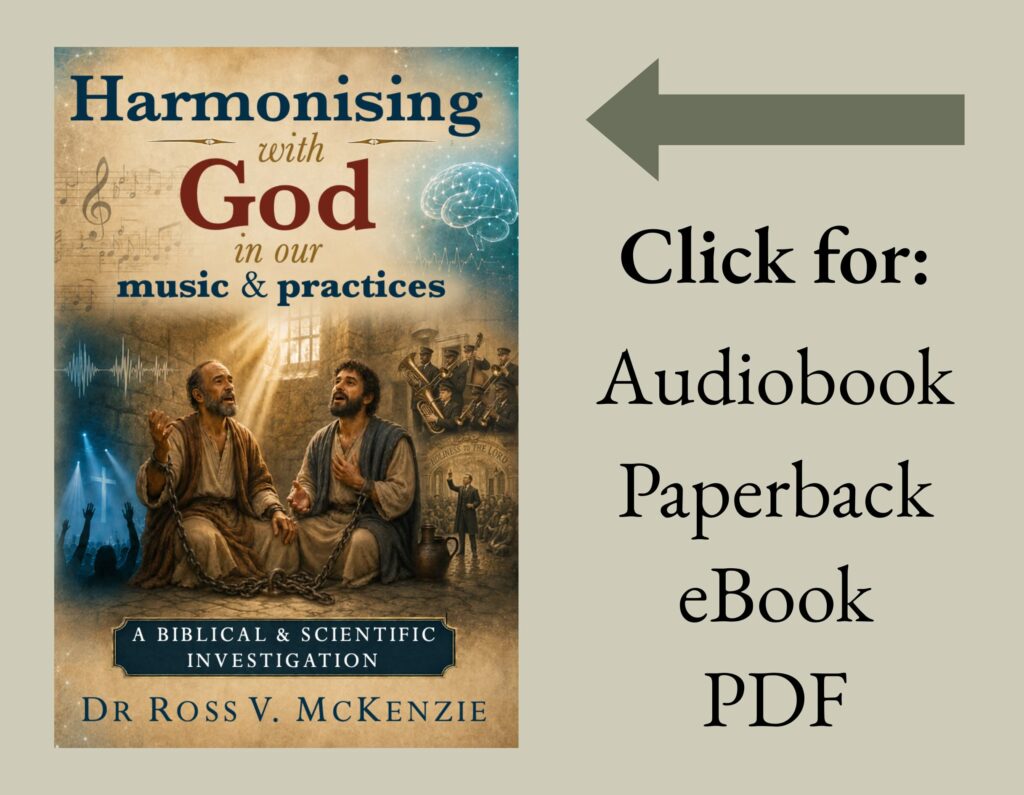
This book will explore the significance of the shift in distinctions in our beliefs and practices, including sacred music, doctrinal distinctions, male-female roles, and others. At the foundation of the world, God created many distinctions, including distinctions between good and evil, God and people, regular days and the Sabbath day, male and female, and animals and humans. This book explores how a shift in our understanding of these distinctions has gradually changed our practices and it discusses the part that music has played in that process. Scholar Peter Jones believes the removal of distinctions has partly come about due to the influence of mystical and Eastern philosophies which were introduced to the West by the New Age movement and have entered the church. Importantly, he believes that Progressive Spirituality has emerged as a new term for the New Age.
But are all changes in beliefs and practices bad? Is there really such a thing as sacred music apart from the lyrics? Though we were created as male and female, does this mean the genders must also have different roles in the church? We will spend much time exploring various views on these important questions, comparing them with Scripture.
In the 1800s, many influential Christians, including professed prophets, opposed orthodox practice, which led to much change, profoundly influencing our practices today. For example, Mary Baker Eddy, founder of the Church of Christian Science, adapted New Thought philosophy, which is now widely practised throughout Christianity today. In his dissertation on New Age influence in the church, Professor Chris Berg said that Pentecostal and Charismatic denominations are particularly vulnerable to New Age influence and that Holiness theology played a major role in the theological foundation of Pentecostalism from which the Charismatic movement also emerged. The Booths, who were part of the Holiness movement, were very influential in their time, significantly contributing to the changing religious and social culture and the emergence of Pentecostalism. Ellen White, believed by the Seventh-day Adventist Church to be a prophet, openly opposed the methods of the Salvation Army and her views will also be extensively examined in this book.
Interwoven in this discussion will be an ongoing exploration of William Booth’s claim concerning music, and the views of his opponents and other influential Christians throughout the ages. There will be much discussion about the science of music as well as the views of music experts. Science, musicians and music professionals have repeatedly demonstrated just how powerfully music, apart from the lyrics, can influence us, even changing our characters and the structure of our brains.
The pattern of use of music in the Bible, as discussed in the book, provides much guidance for the selection of appropriate music choices for church and personal use to ensure that our practices harmonise with God. Almost certainly, the majority of readers will not agree with every conclusion in this book. The purpose is not to try to make everyone agree with every point, but to encourage every believer to think upon these important topics, to ensure that we are growing in our knowledge and understanding of God, becoming increasingly more harmonious with His character and desires.